A Fragrance Making Class Built on Fine Materials
If you say fragrance rather than perfume, a fragrance making class is exactly what you are looking for. After all, the words mean nearly the same thing. What matters is what goes in the bottle.
So this page explains what you make and what it is made from. You will meet the materials, learn how a scent is structured, and then create your own. Then everything ends as an eau de parfum you can wear that day.
- Absolutes and CO2 extracts
- Eau de parfum strength
- Quoted for your group
- Served in three cities
What you create in a fragrance making class
Every finished bottle is an eau de parfum. That term simply means a concentrated perfume. Ours is about 50% fragrance material, so it feels rich on skin.
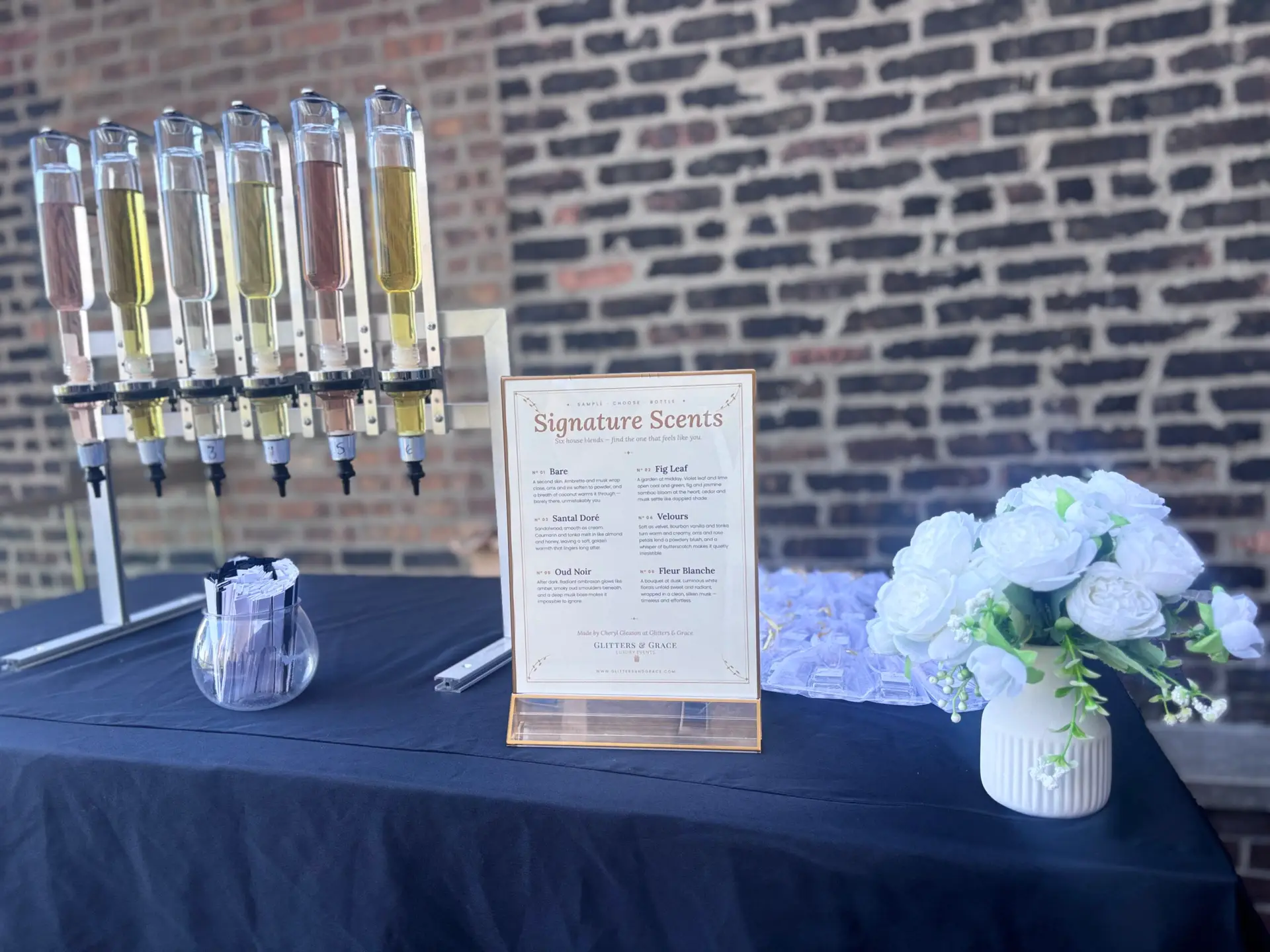
The materials matter even more. We use absolutes, which are highly concentrated aromas drawn from flowers. We also use CO2 extracts, plant aromas drawn out with pressurized carbon dioxide. Finally, essential oils add bright, natural character.
These are the same kinds of materials perfumers reach for, too. Our founder, Cheryl Gleason, is a trained perfumer, and she chose them on purpose. As a result, even beginners work with a palette worth learning from.
Notice how an absolute smells deeper than an essential oil. That contrast teaches more than any chart.
Inside a fragrance making class: the materials and the structure
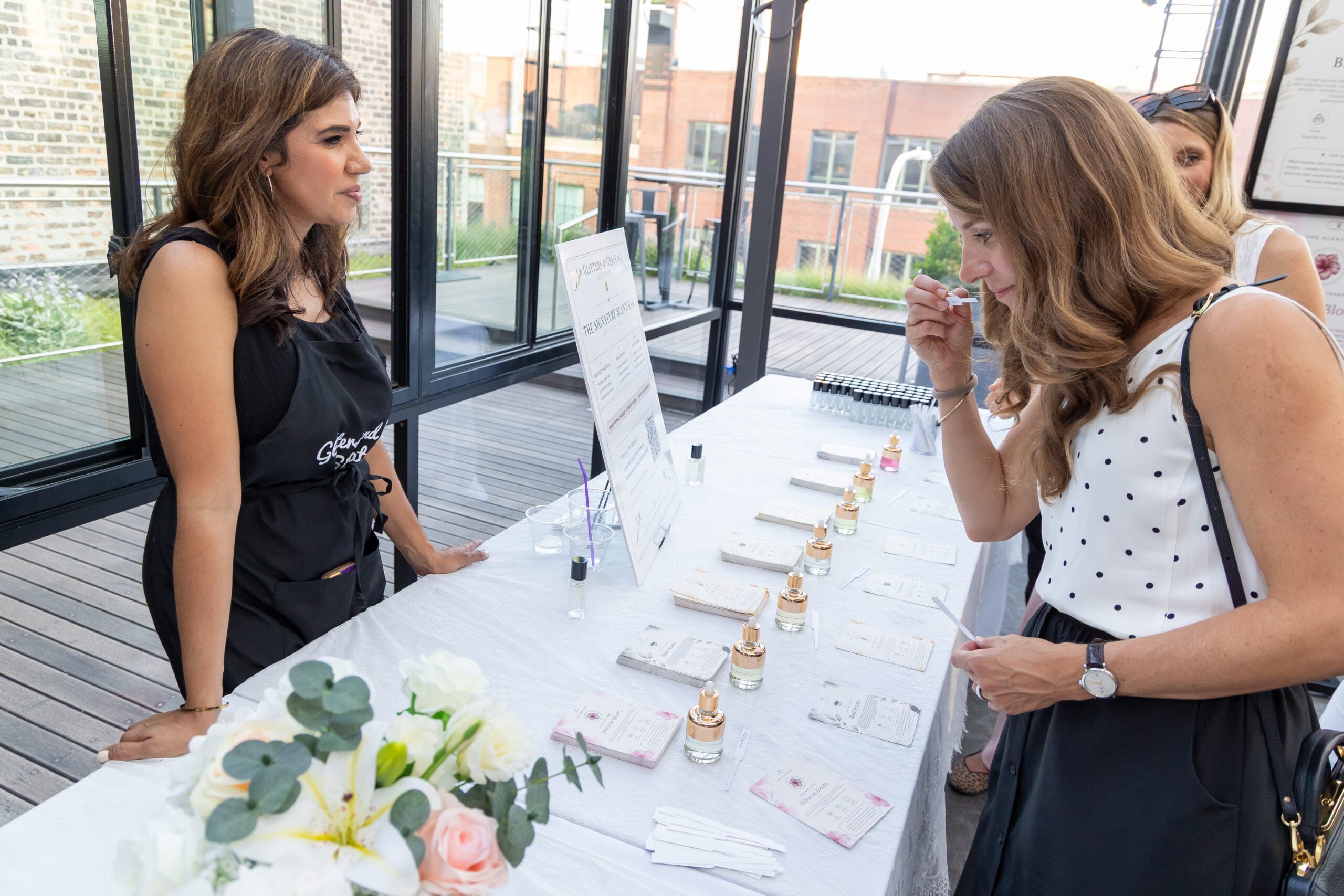
Here is what sits on the table and how it fits together. Each piece has a job.
Absolutes
An absolute captures a flower's aroma in concentrated form. A single drop often carries a lot of character.
CO2 extracts
These extracts often smell close to the living plant. Therefore, they add warmth and realism to a blend.
Essential oils
Essential oils bring brightness, especially citrus and herbs. They often lead the opening of a scent.
Fragrance families
A family is a group of scents with a shared character, such as floral or fresh. Knowing them helps you choose.
Notes in layers
Top notes open the scent, middle notes form its heart, and base notes linger. Together, the fragrance families and notes give a perfume shape.
Your eau de parfum
At the end, your formula becomes a spray at eau de parfum strength. Then you name it and label it.
Host a 101 Workshop at home
Your class is quoted for your group. Then we bring the curated palette to your home, venue, or event space in Chicagoland.
Ways to make the most of the materials
A few small habits help guests learn faster, especially beginners. So try these during class.
In everyday use, fragrance and perfume mean almost the same thing. However, strength terms like eau de parfum tell you more.
Who books a fragrance making class
Classes suit curious guests of many ages. Also, they travel to Milwaukee and Indianapolis for quoted events.
Scent lovers
Friends who collect perfume enjoy seeing how it is made. Plus, they finally learn what they love.
Showers
The Elevated tier brings deeper education and a staffed perfume bar to a shower.
Families
Kids ages 5 and up can join the 101, so three generations can share one table.
Brand launches
The Branded Fragrance Workshop suits product launches and team events.
Small reunions
Old friends gather around something new, so conversation comes easily.
Retirements
A fragrance marks a new chapter. Afterward, guests leave with a scent tied to the moment.
Rooms that suit a class
A table, good light, and a little air flow are all you need. We bring the rest.
Dining rooms
Everyone sits together, which keeps the lesson intimate.
Sunrooms
Natural light makes it easy to see each material, too.
Banquet rooms
Larger groups often spread out comfortably at several tables.
Conference rooms
Team classes also fit right into a workday.
Mokena studio
Opening in January 2027, the studio offers a private party room for up to 40. It is BYOB for adults.
How a fragrance making class flows
- Meet the materials.First, smell absolutes, CO2 extracts, and essential oils one by one.
- Learn the families.Next, sort what you smelled into groups that share a character.
- Build your structure.Then choose top, middle, and base notes for your scent.
- Blend and test.After that, blend and adjust until it feels balanced.
- Bottle your fragrance.Finally, bottle it as an eau de parfum and give it a name.
Full ingredient and allergen disclosures come before your class. Also see our allergens and safety page.
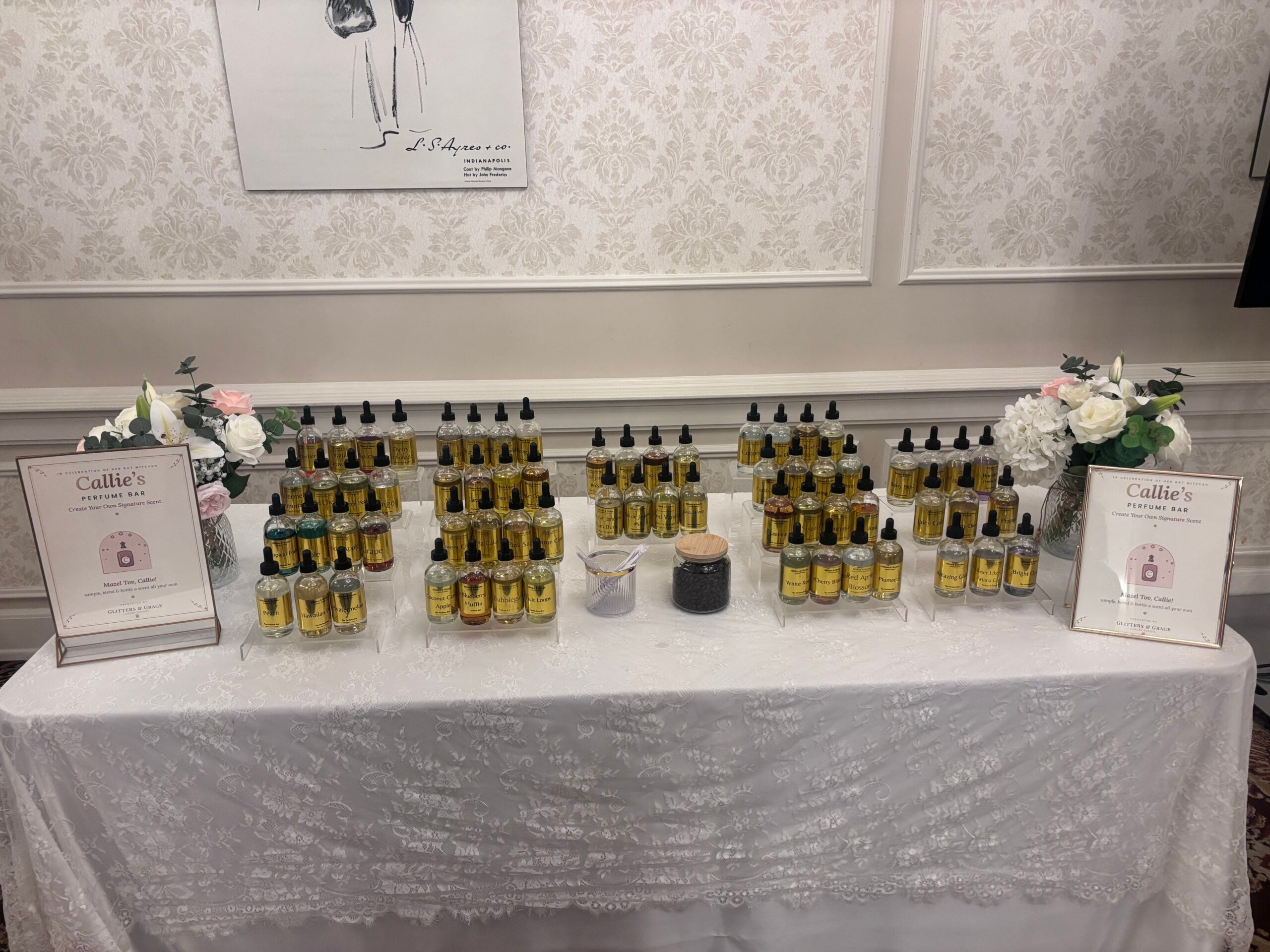
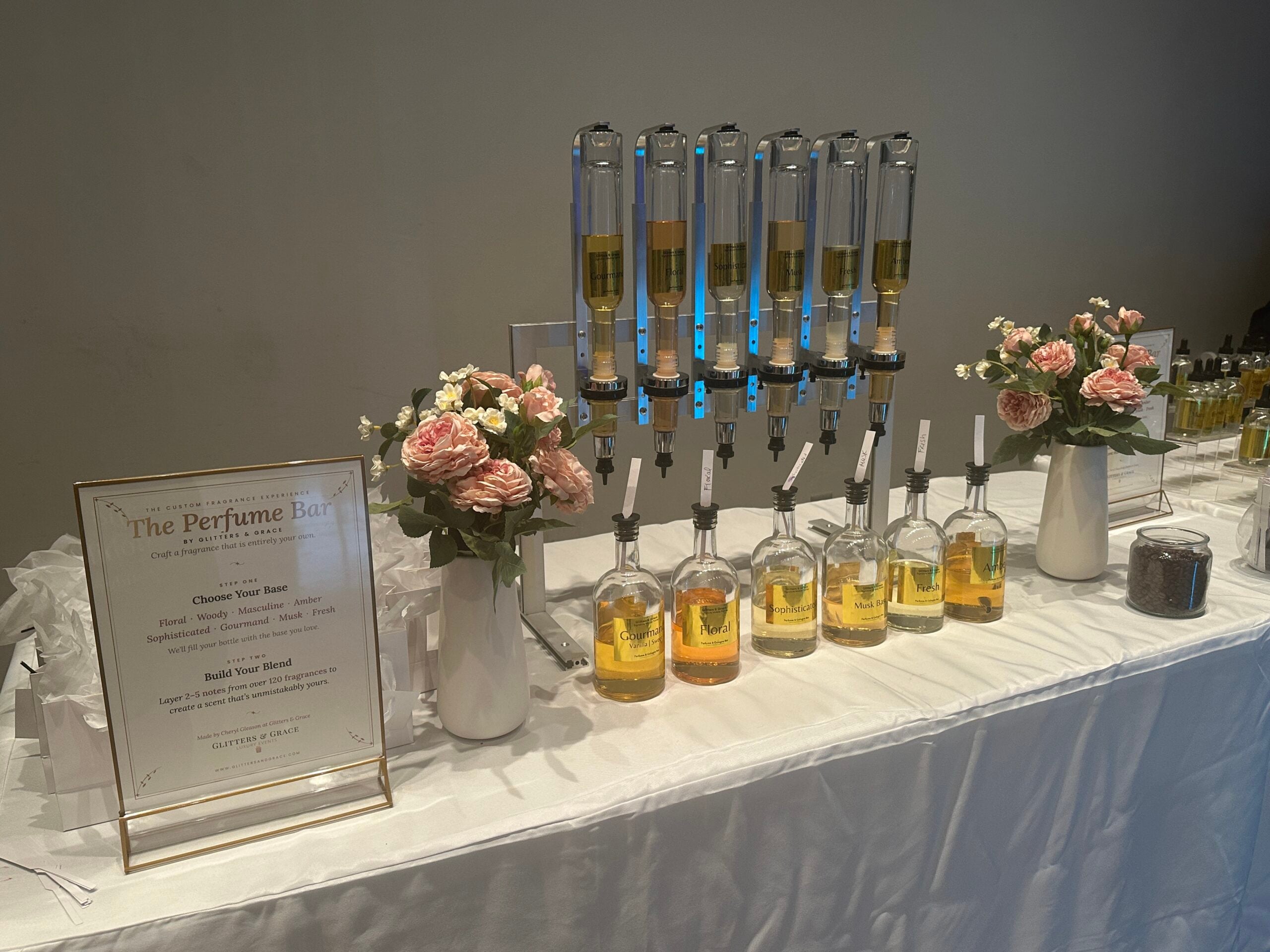
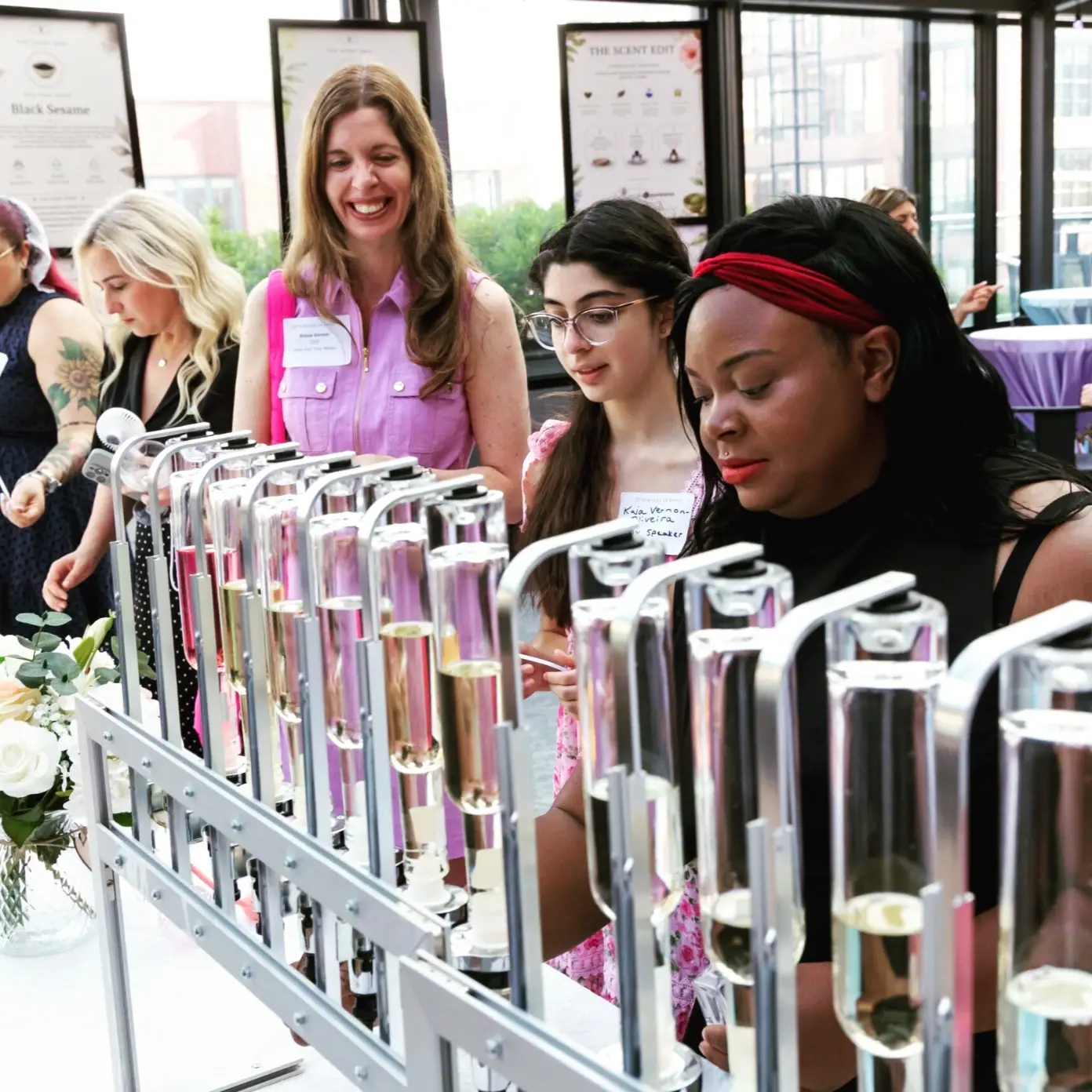
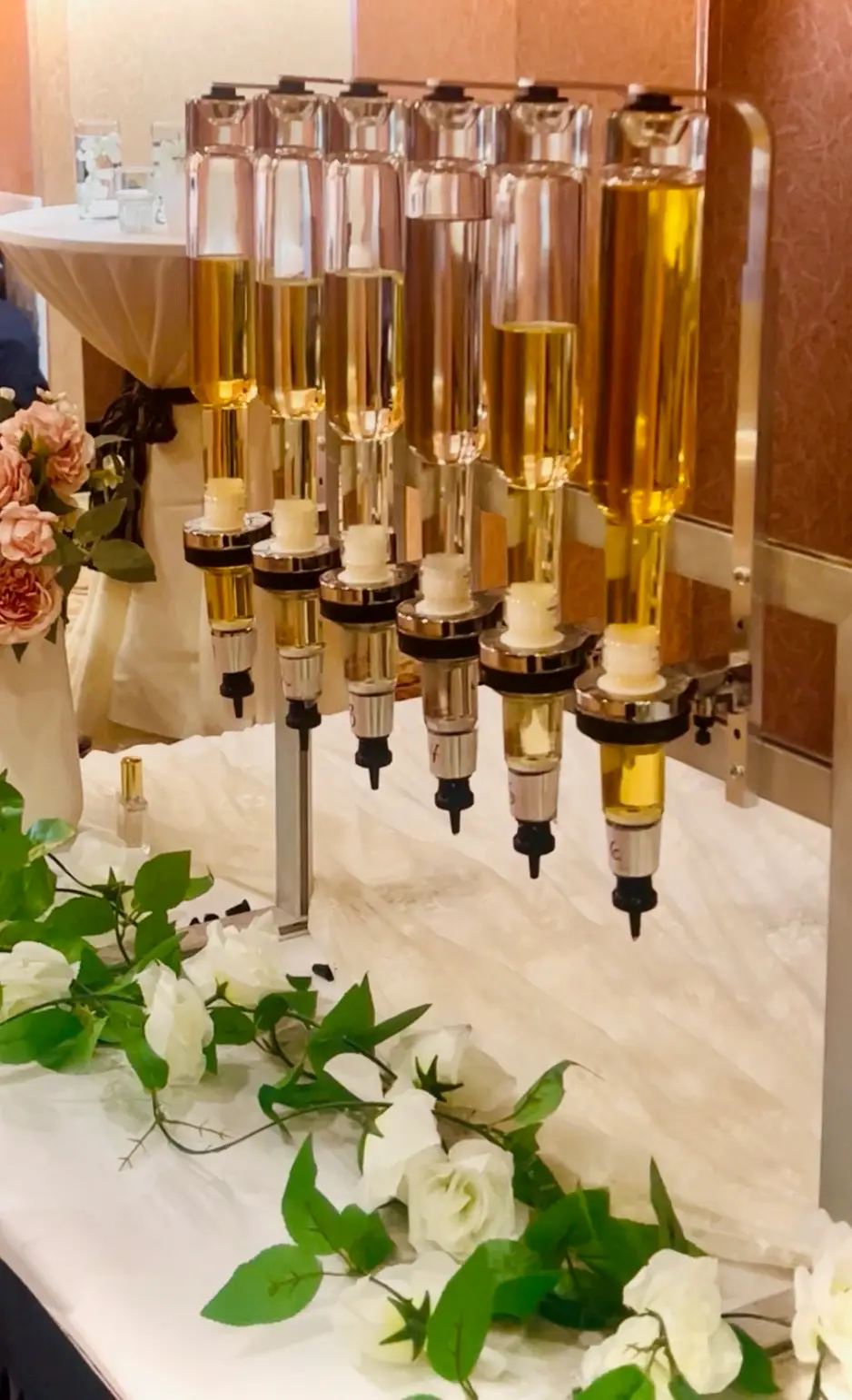
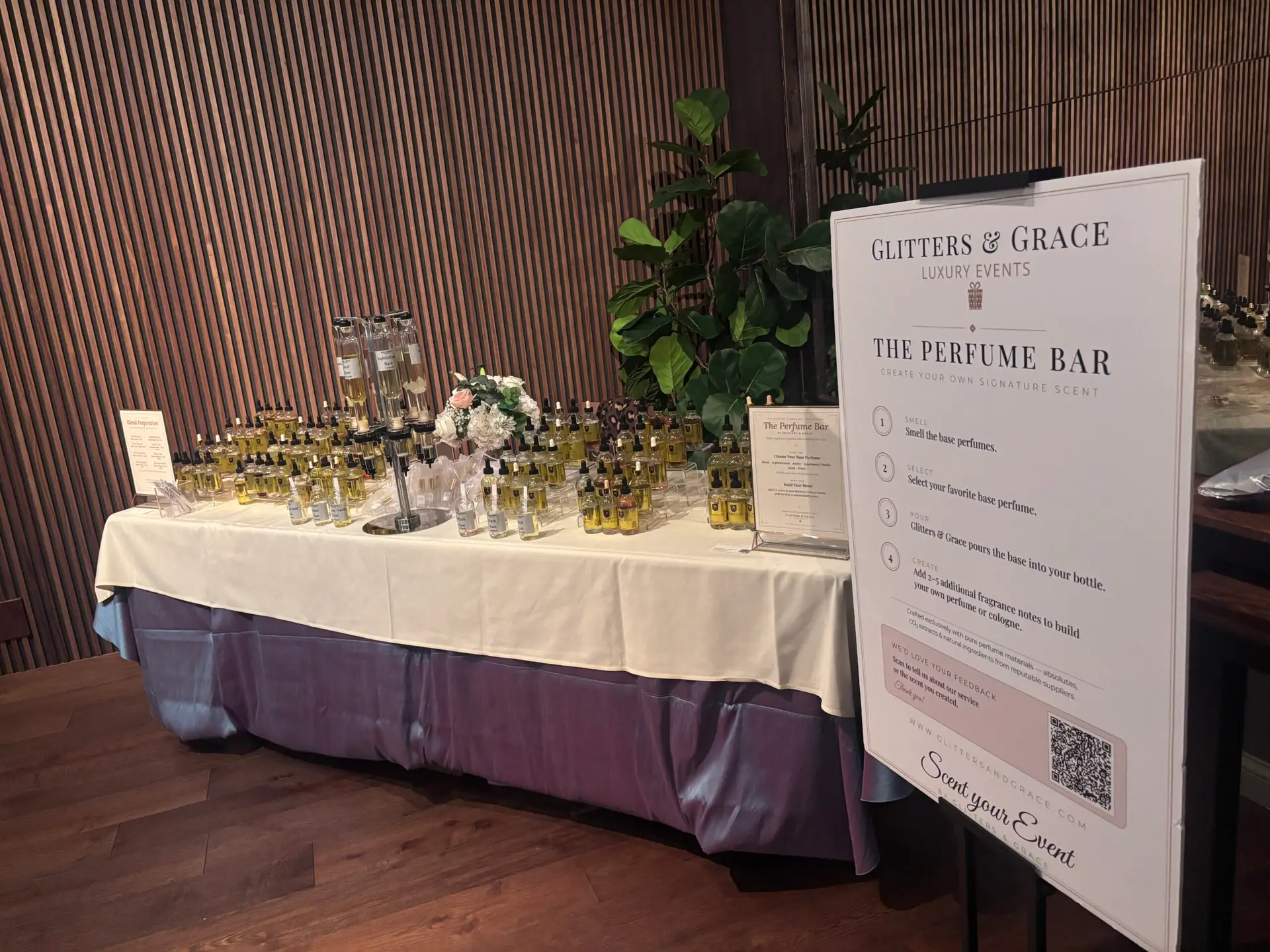
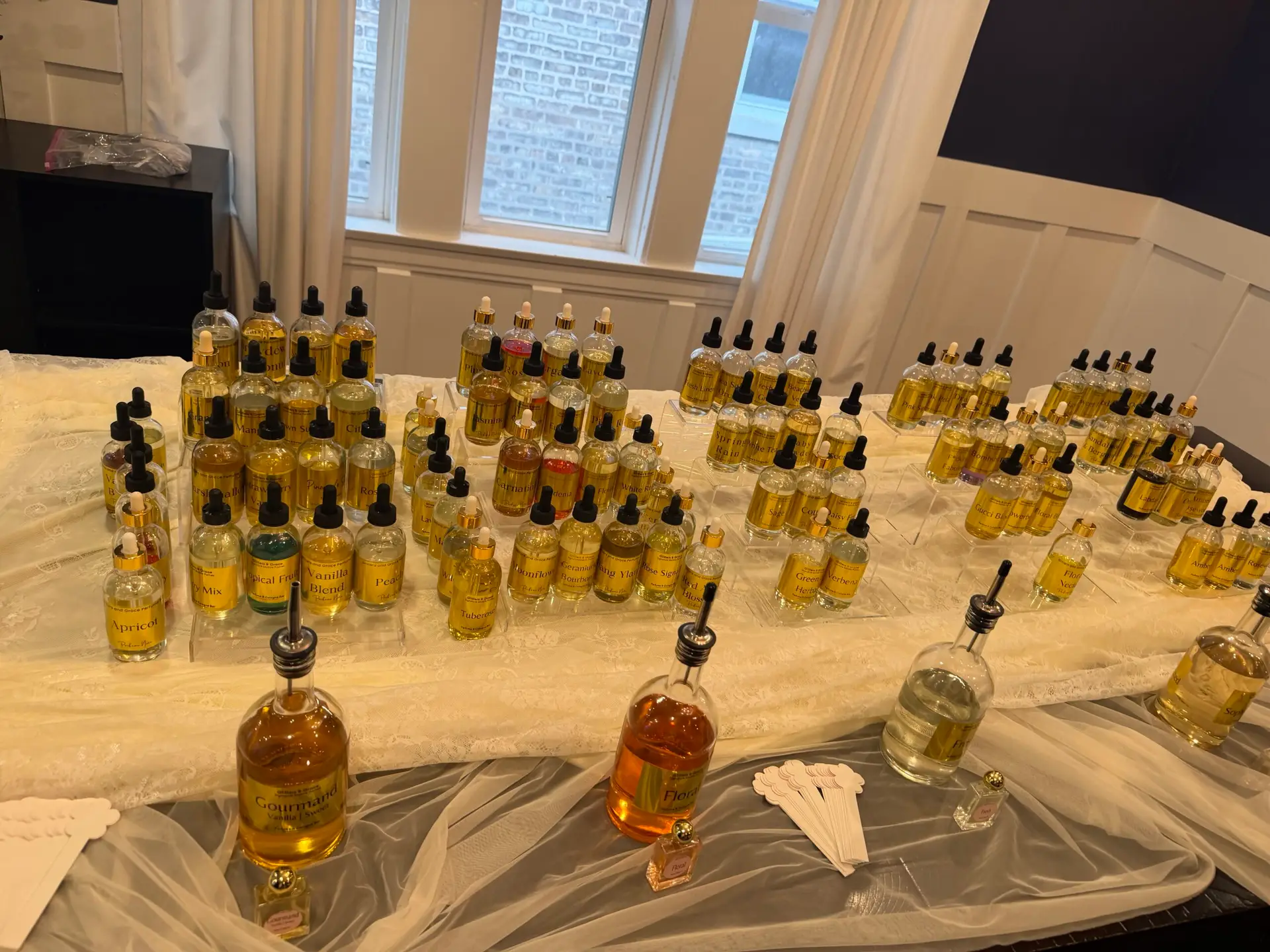
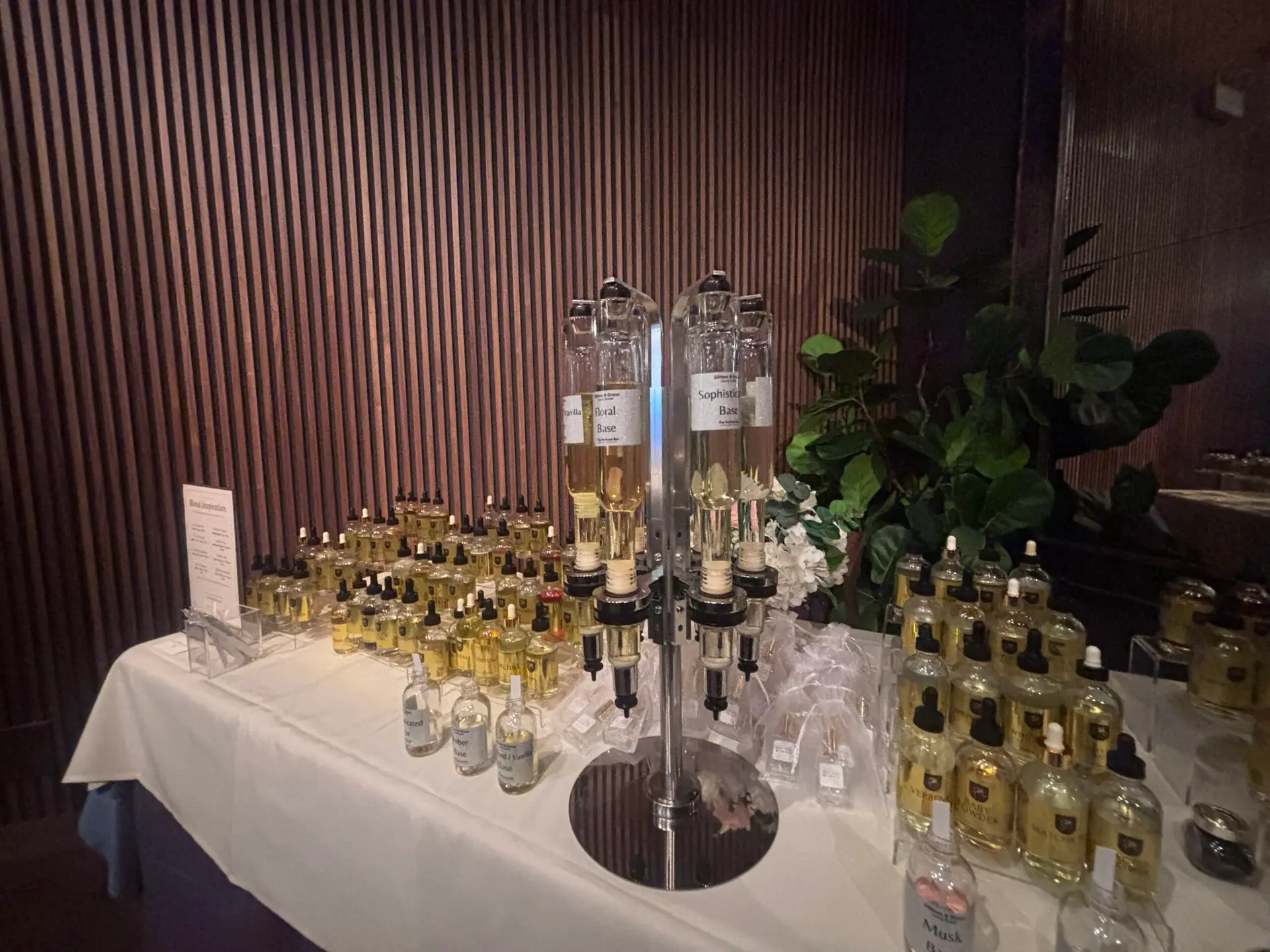
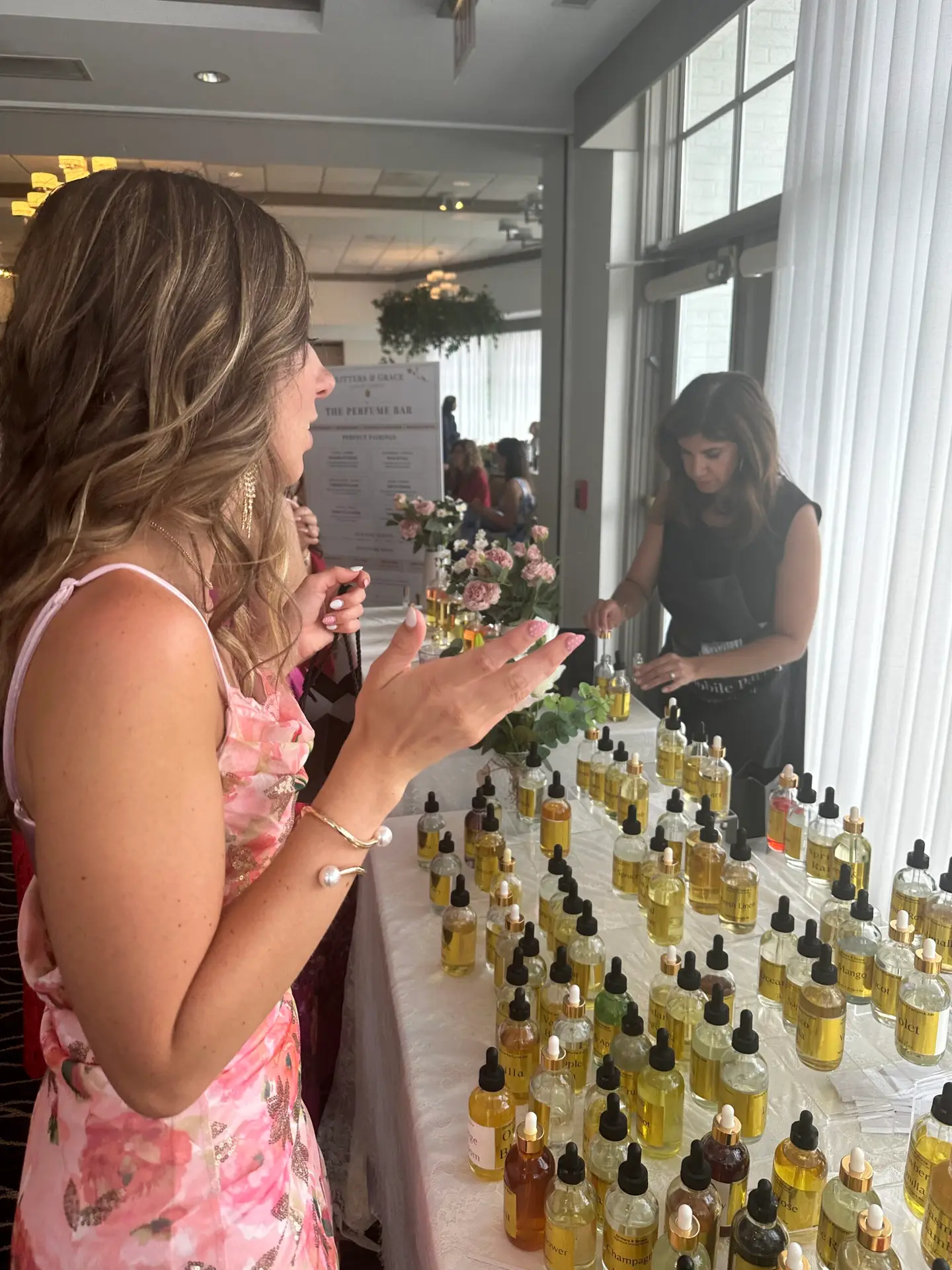
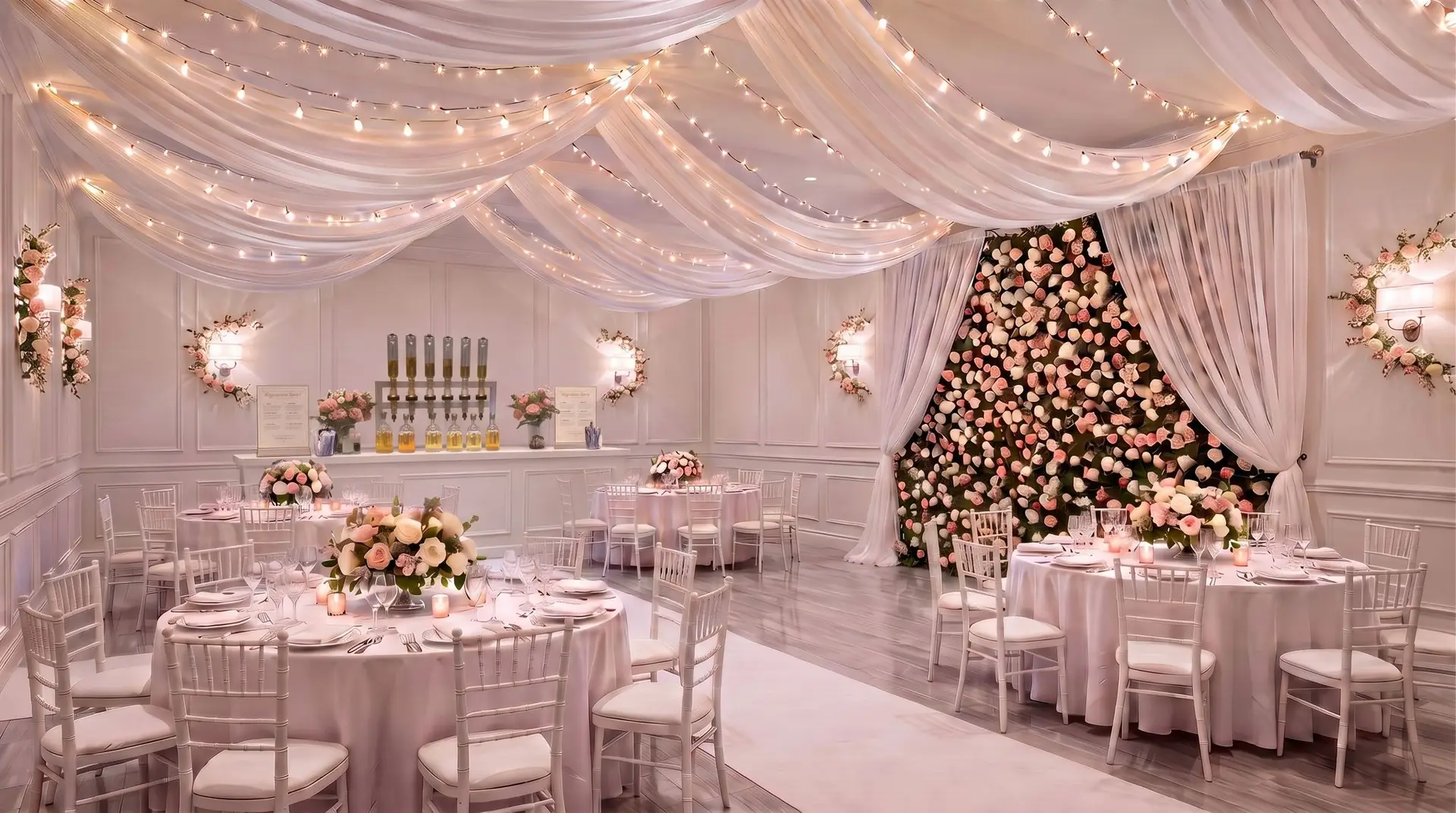
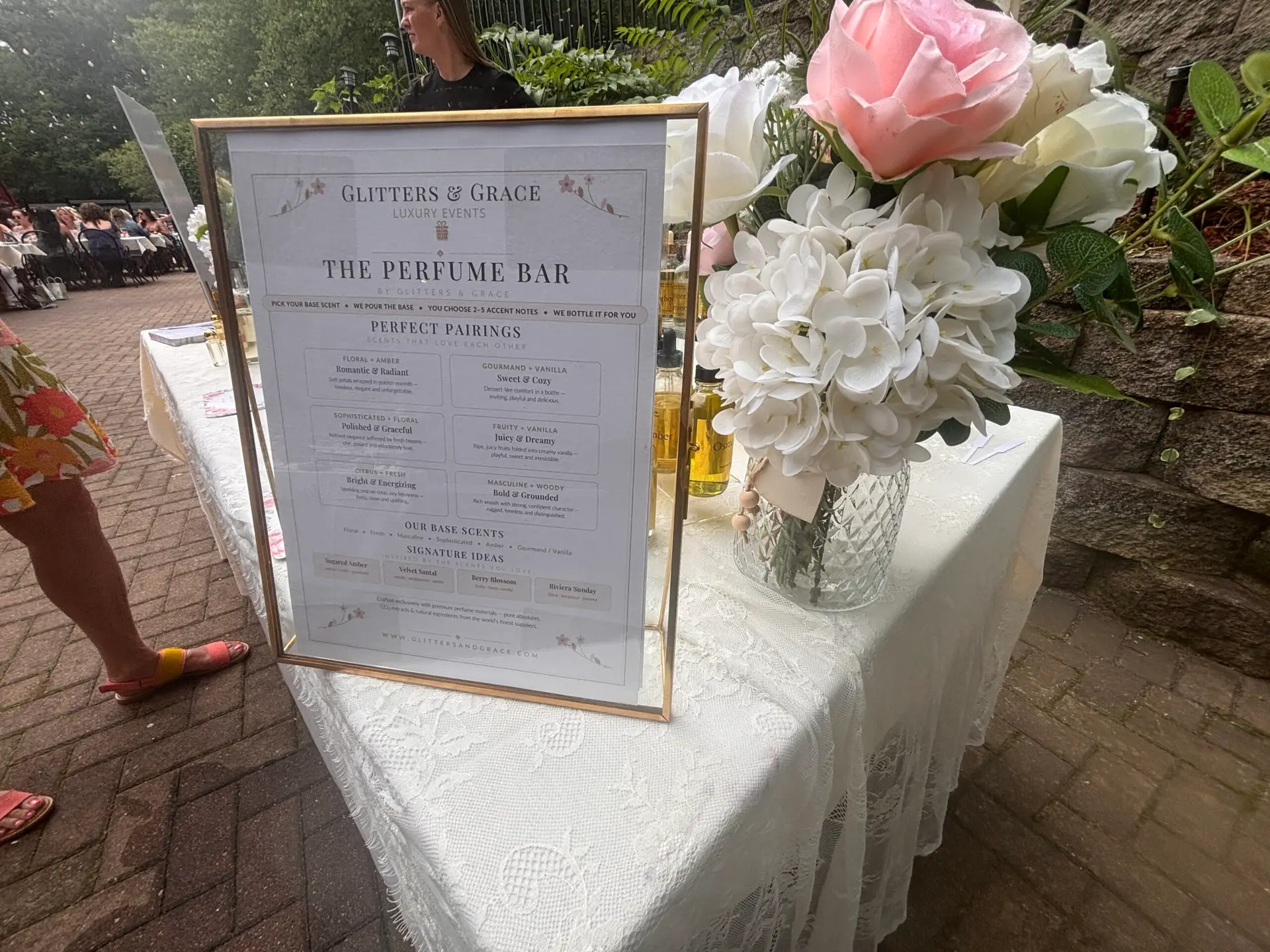
Fragrance making class materials and settings
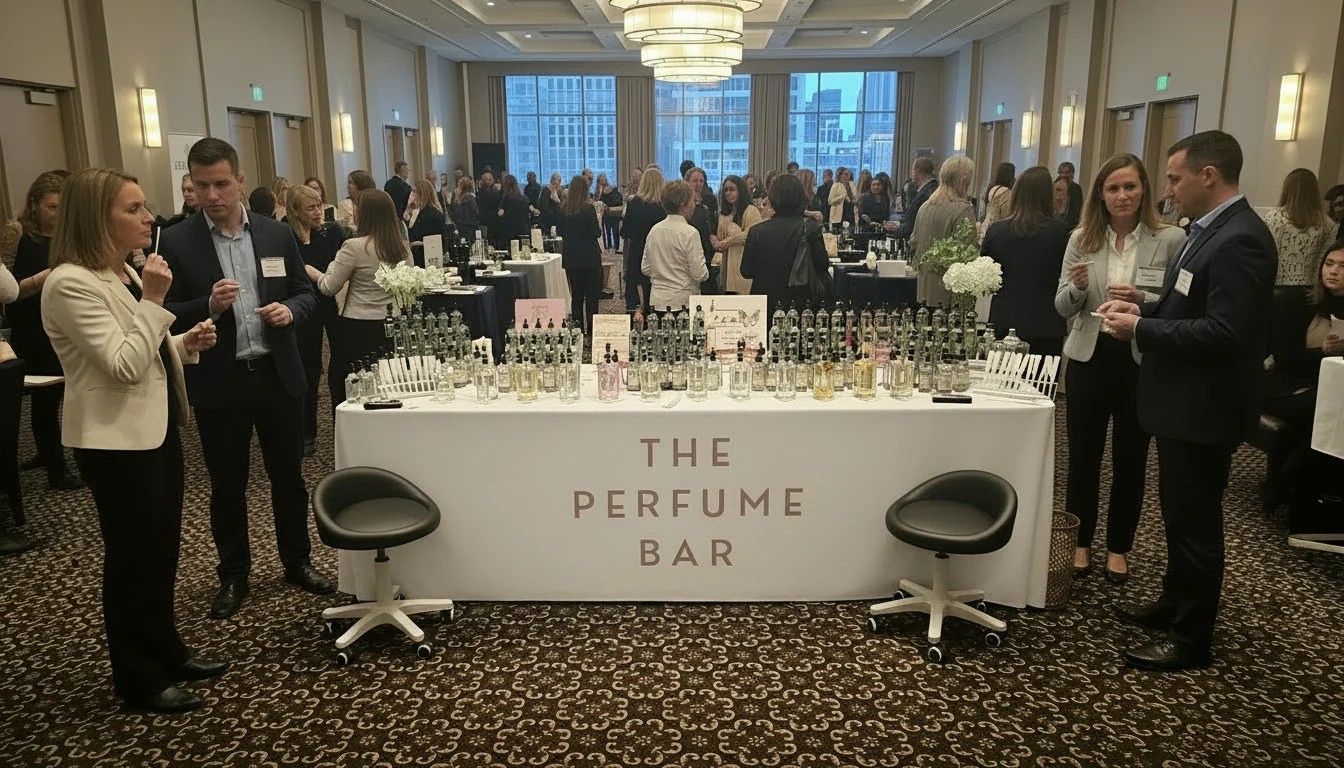
These photos show the palette and the setups, too. Each one changes slightly to suit the room.
Plan your fragrance class
Book online or call 815.418.6740. Then we will help you choose the right format for your group.
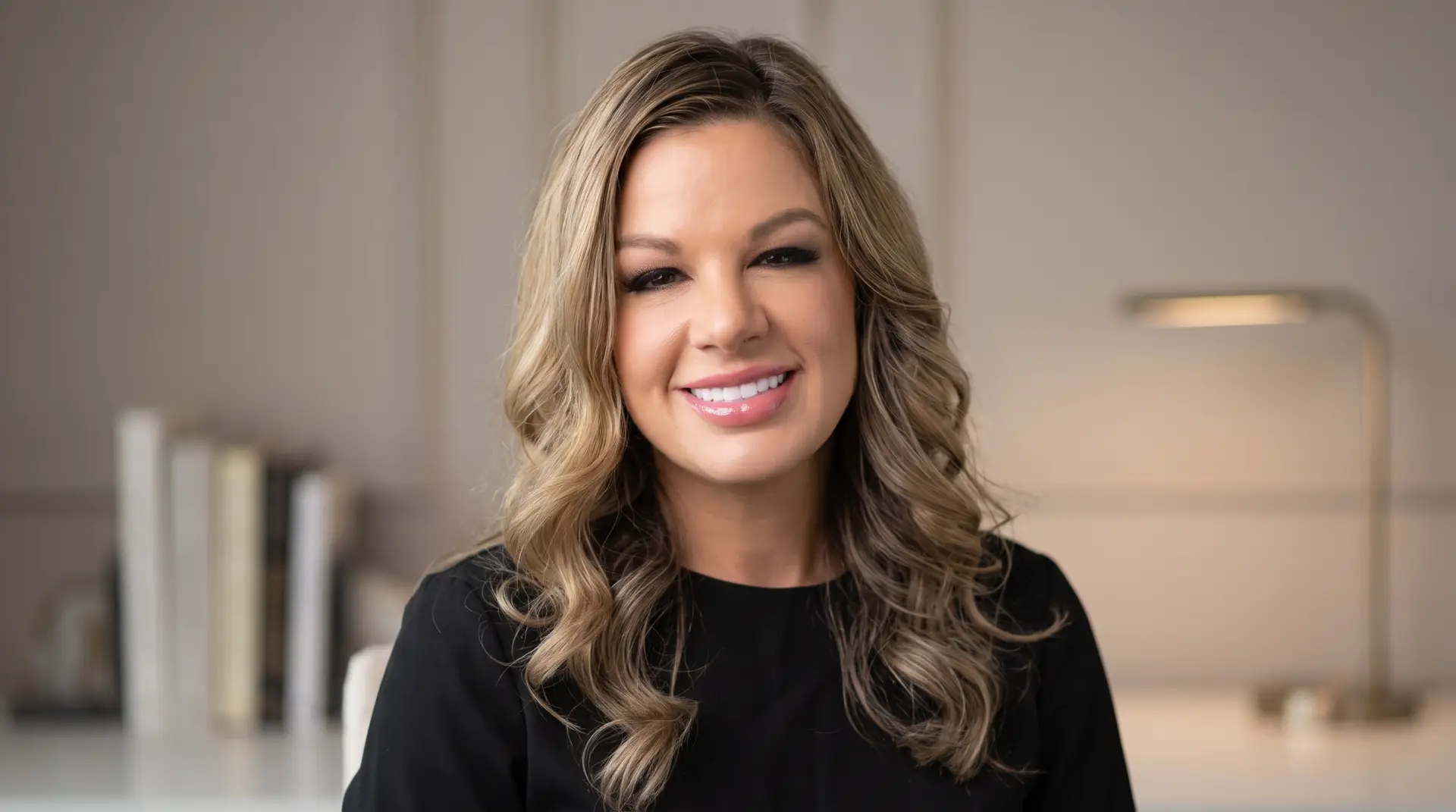
Glitters & Grace was founded by Cheryl Gleason, a trained perfumer, a cosmetic and skincare formulator, and the creative force behind every bar we bring to your event.
Where we hold fragrance making classes
First, our classes start in Chicagoland, our home base. The Fragrance Workshop also reaches Milwaukee and Indianapolis with local teams. Then our Mokena studio opens in January 2027.
Chicago and the North Shore
Condos, homes, and party rooms from the city to Lake Forest.
Western and Northwest Suburbs
Homes, clubhouses, and venues across DuPage and the northwest suburbs.
Southwest Suburbs and Will County
Our home base, minutes from the Mokena studio.
Milwaukee Area
Local Glitters & Grace hosts and teams to bring you sparkle.
Indianapolis Area
Local Glitters & Grace hosts and teams to bring you sparkle.
Mokena Studio
19060 Everett Blvd, Suite 107, Mokena, IL 60448. Opening in January 2027 with a private party room for up to 40 guests. Visit the studio page or call 815.418.6740.
Fragrance making class FAQ
Is fragrance different from perfume?
In everyday use, not really. Both describe a scent you wear. Still, our finished bottles are eau de parfum strength.
What is an eau de parfum?
It is a concentrated perfume. Ours is about 50% fragrance material.
What is an absolute?
An absolute is a highly concentrated aroma drawn from a flower.
Do you use synthetic fragrance oils?
Our classes are built around absolutes, CO2 extracts, and essential oils. Ingredient disclosures come before your class.
How much is a class?
Classes are quoted for your group or event. Just share your guest count and date.
Can I keep my formula?
Only at a private consultation, which starts at $650. There, your formula is recorded and kept.
Do you travel to the western suburbs?
Yes. We often teach in Naperville, Oak Brook, Hinsdale, and across Chicagoland.
Do you hold classes in Milwaukee?
Yes. The Fragrance Workshop serves Milwaukee, Wauwatosa, and nearby towns.
Do you hold classes in Indianapolis?
Yes. The Fragrance Workshop serves Indianapolis, Carmel, and Zionsville.
Where is your studio?
It is at 19060 Everett Blvd, Suite 107, in Mokena. Then it opens in January 2027.
Book a fragrance making class
Reserve online or call 815.418.6740. Then discover what fine materials can do.
perfume@glittersandgrace.com · 815.418.6740
With Grace,
Cheryl Gleason · Owner, Perfumer & Creative Director