Can You Really Make Your Own Perfume at Home?
Yes, you can. Here is what a trained perfumer wants you to know before you buy your first bottle of anything.
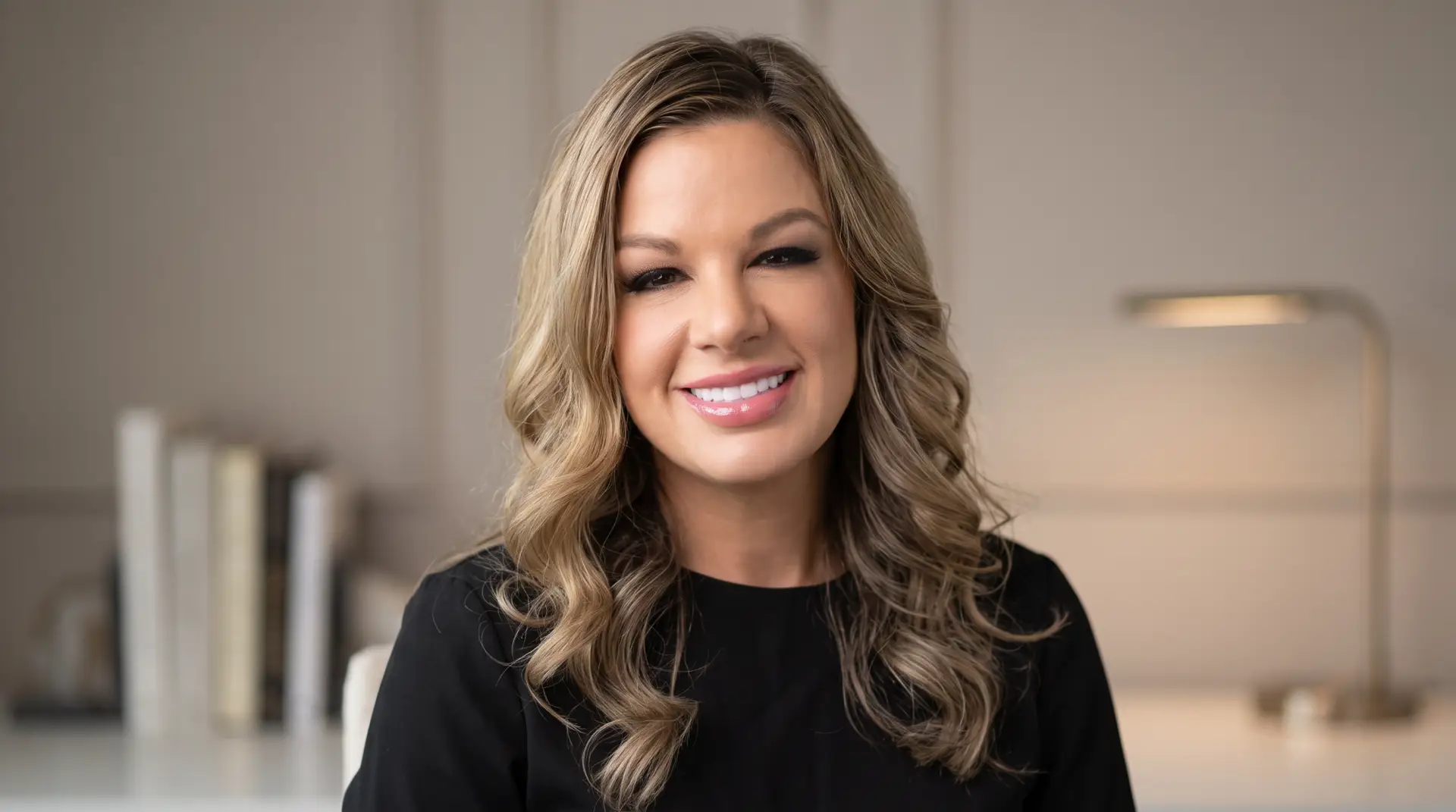 By Cheryl Gleason · Founder & Perfumer
Can you make perfume at home without any training?
You can, and I hope you do. Making perfume at home is one of the most absorbing hobbies I know. It slows you down, it trains your nose, and it changes how you smell everything around you.
Yes. To make perfume at home, you need a few fragrance materials, perfumer's alcohol, a small scale, glass bottles and paper smelling strips. Start with three to five materials, weigh and write down everything, and let each blend rest before you judge it. Real perfumery materials and a little guidance are what make it last.
I am a trained perfumer. I studied with master perfumer and educator Karen Gilbert and at the Institute for Art and Olfaction in Los Angeles, and I still take classes whenever I can. Every fragrance at Glitters and Grace is made by hand in our New Lenox lab.
But I didn't start in a lab. I started where you are: curious, a little impatient and very sure the next drop would fix everything. So this guide is the one I wish I had at the beginning. It is honest about what works, what doesn't and where homemade perfume usually goes wrong.
What do you need to make perfume at home?
Less than you think, and more carefully chosen than most kits suggest. Here is the short list I give beginners.
- Fragrance materials. Start with three to five. Essential oils are a fine beginning, but add at least one or two richer materials, like an absolute or a CO₂ extract (more on those below).
- Perfumer's alcohol. This is a high-proof ethanol made for fragrance. Karen Gilbert puts it plainly: “You need perfumer's alcohol which is 96%+ ethanol.” Rubbing alcohol and vodka are not good substitutes for something you will wear.
- A small digital scale. One that reads to 0.01 gram.
- Glass droppers, beakers and bottles. Glass doesn't hold onto old scents the way plastic can.
- Paper smelling strips. Perfumers call them blotters. You dip one, wave it gently and smell.
- A notebook. This one matters more than all the rest.
Where you buy matters, too. Karen's advice is to “avoid buying from aromatherapy suppliers if you're planning to create skin perfumes”, because perfumery suppliers grade and document materials for use on skin. I trust Perfumer's Apprentice and Fraterworks for small sizes. Curious what all of this costs? I break it down in is it cheaper to make your own perfume.
Why does homemade perfume fade so fast?
Because most beginner blends are built almost entirely from top notes. Top notes are the bright first impression of a scent, and they are also the first to leave.
Perfumers sort materials by how quickly they evaporate. Karen describes top notes as “the materials you notice first”, and the most volatile ones, like bergamot, lemon and other citrus oils, disappear quickest. Heart notes, mostly florals like rose, geranium and jasmine, last for hours. Base notes, like vanilla, benzoin and sandalwood, form the drydown that “will linger when everything else has disappeared.”
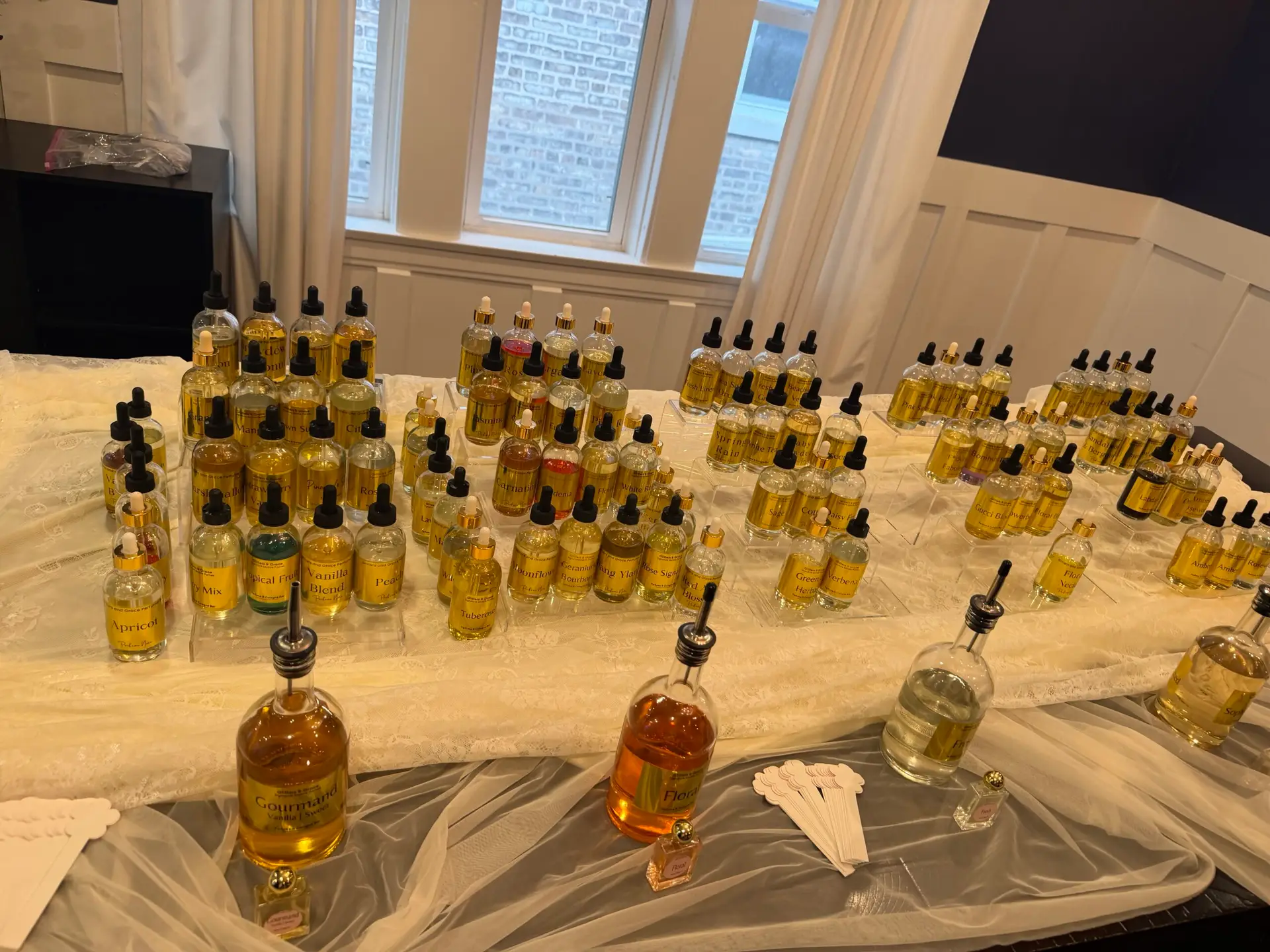
Most of the essential oils people already own sit at the top: orange, lemon, peppermint, eucalyptus. A blend made only from those smells wonderful for twenty minutes and then seems to vanish. Nothing went wrong. The blend simply had no foundation.
Give every blend a base. Even a small amount of vanilla, a resin like benzoin or a wood like sandalwood will hold the brighter notes in place much longer.
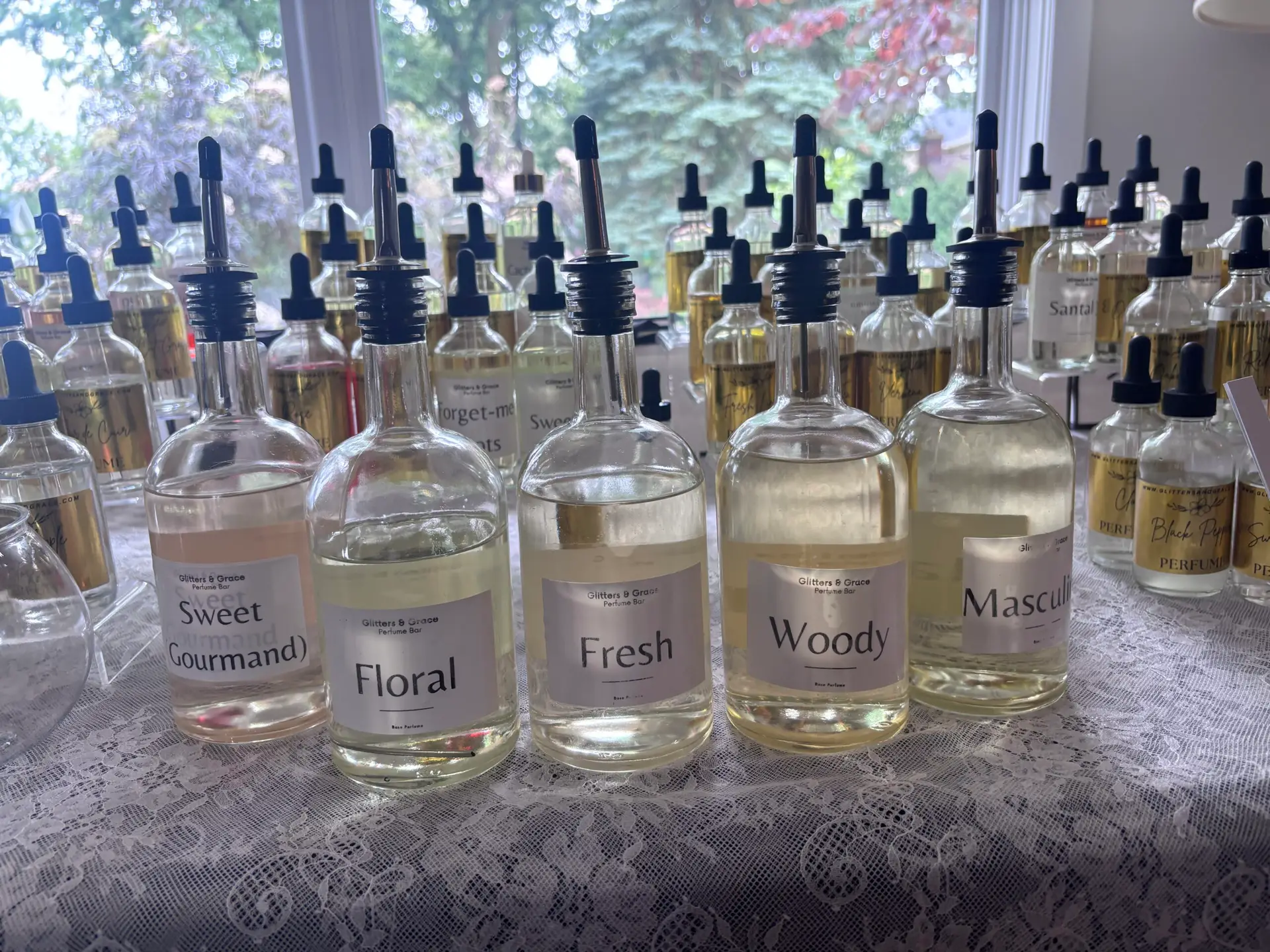
That is also why every blend at our bars starts from a base, the foundation a perfume is built on. We offer six: floral, masculine, fresh, musk, sophisticated and gourmand, which means sweet and edible-smelling. You can read more in my DIY fragrance handbook.
How do you make perfume at home, step by step?
Start with an accord, not a whole perfume. An accord is a small blend of materials that reads as one smell, the way a chord is several notes that sound like one sound. Here is the simple method I teach.
1. Name the feeling first
A summer porch. Your grandmother's garden. Rain on warm pavement. When I created our Matcha Teatime perfume, I wrote down the mood before I touched a single bottle. It is much easier to choose notes when you know what you want the perfume to do.
2. Pick one material from each layer
Choose a top note, a heart note and a base note. A classic first trio is bergamot (top), rose or geranium (heart) and vanilla or sandalwood (base).
3. Weigh, don't guess
In my Perfume 101 lesson, I let beginners work in drops because it is friendly and quick. Once you fall in love with a blend, though, switch to the scale. Karen's rule is “Always weigh your materials. Don't use drops.” Drops vary in size from bottle to bottle, so a formula written in drops is hard to repeat. In our lab, every formula is in grams.
4. Change one thing at a time
Try a simple ratio, like 3 parts base, 2 parts heart and 1 part top. Smell it on a strip. Then change just one material and smell again. It is slower, and it teaches your nose far more.
5. Write down everything
Karen says it best: “Write down everything. Every single material, every weight, every observation.” Note how the blend smells right away, after an hour and the next day. Your notebook becomes your formula library.
6. Dilute and let it rest
Add your blend to perfumer's alcohol in a glass bottle, cap it and let it rest somewhere cool and dark. I always smell a new blend again the next day, and I often wait a week or two before I decide it is finished. Materials settle and soften together as they rest, and what seemed harsh on day one can be lovely by day ten.
Is homemade perfume safe to put on your skin?
It can be, if you respect the materials. Perfume touches skin, often every day, so a few rules matter.
The fragrance industry follows safety standards from IFRA, the International Fragrance Association. Its standards can limit how much of a material goes into a product that touches skin, or rule a material out entirely. IFRA defines the strictest rule simply: “Prohibition: a ban on the use of a material.” Oak moss, one of my favorite materials, is tightly restricted, which is why I use it in measured amounts. I wrote about it in my scent lover's guide to oak moss.
- Dilute before you blend. Strong materials are easier and safer to work with when you dilute them in alcohol first.
- Be careful with citrus in the sun. Some cold-pressed citrus oils contain compounds that react with light. Bergamot oil, for example, “can result in a phototoxic reaction called berloque dermatitis,” a patchy, darkened rash. Look for materials labeled bergapten-free or FCF.
- Patch test. Try a small spot on your inner arm and wait a day.
- Ask for documentation. Good suppliers share safety paperwork, including IFRA certificates.
At our bars, I have already worked out safe levels for every material, so guests can play freely. Our allergens and safety page explains how we do it, and so does my post on IFRA-certified fragrances.
What happens when you try to make a perfume you already love?
You learn humility, fast. I build inspired blends all the time, and as I wrote after creating a Billie Eilish-inspired perfume, sometimes I nail one on the first try and other times it takes a few rounds.
One guest came to our bar wanting her own version of Philosophy's Amazing Grace, a soft, clean floral. We looked at how a scent like that is built: bergamot and grapefruit on top, freesia, jasmine and rose in the heart, musk and soft woods at the base. She kept the bergamot and freesia, added a little pear, swapped rose for peony and layered our soft musk with a touch of vanilla. The result nodded to the perfume she loved, but it was entirely hers. You can read the full story in build your signature scent.
What's the easiest way to make a perfume that smells professional?
Make it with a perfumer beside you. You still choose every note, and someone who knows the materials can steer you toward combinations that sing.
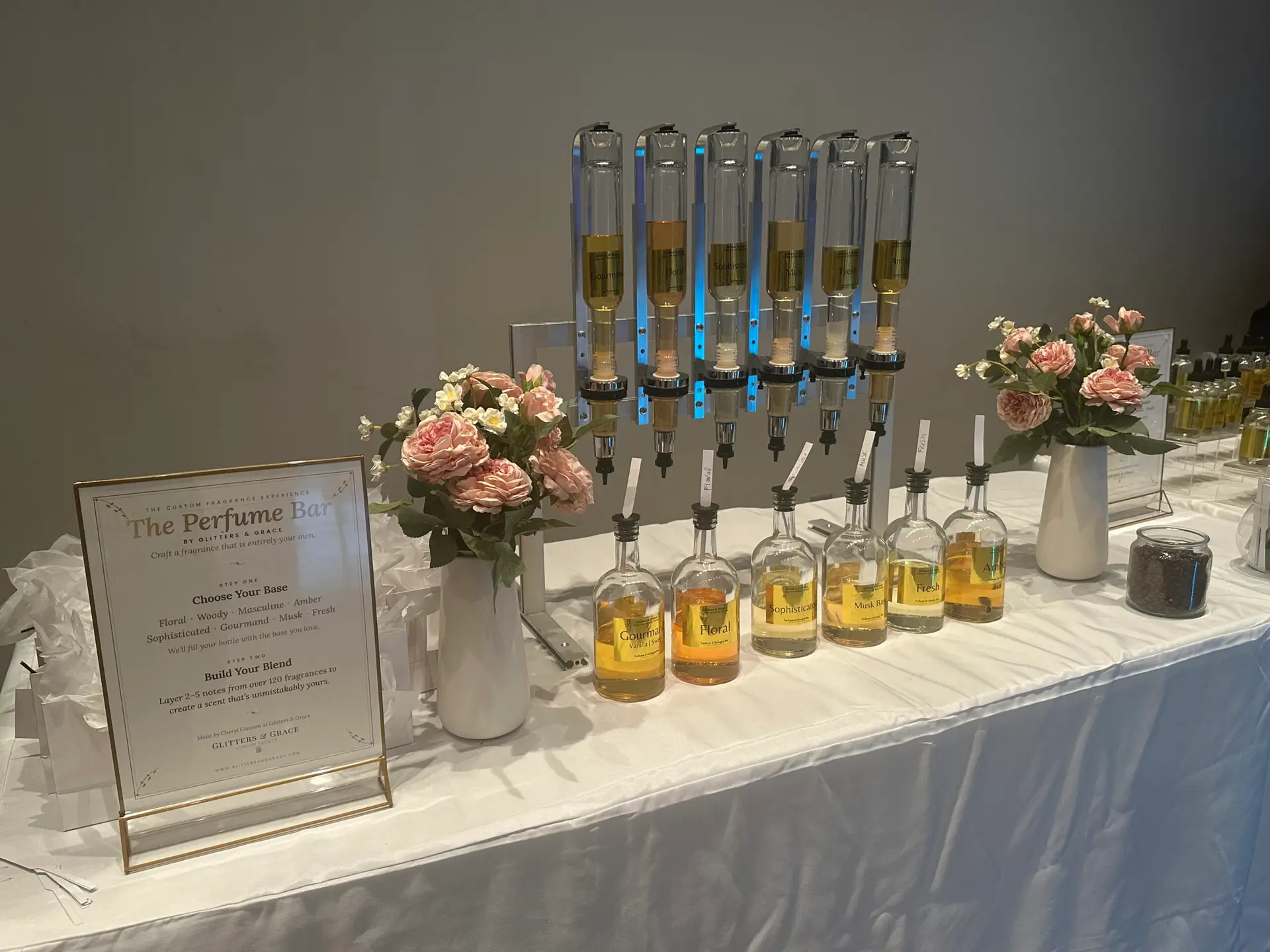
At a party or event
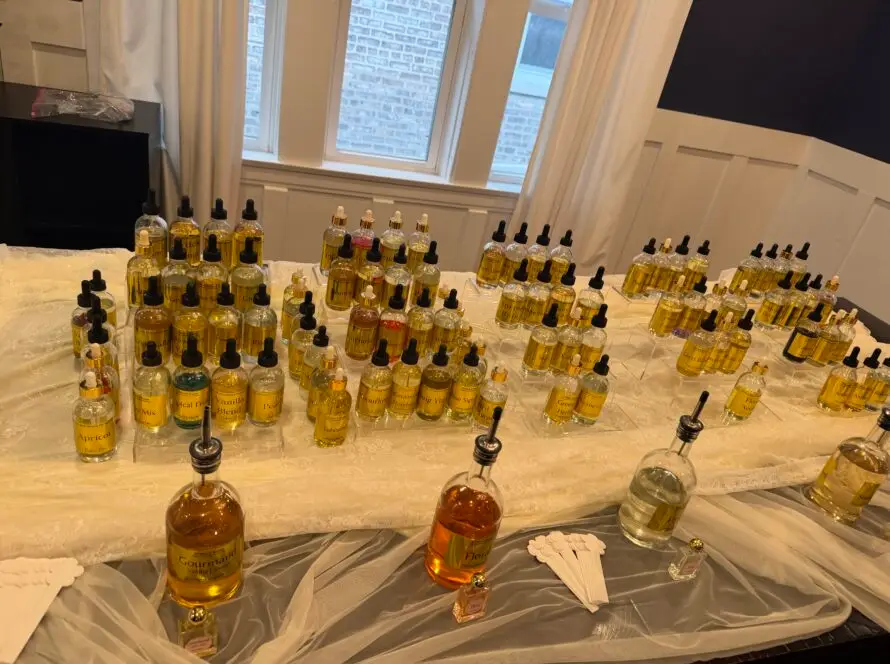
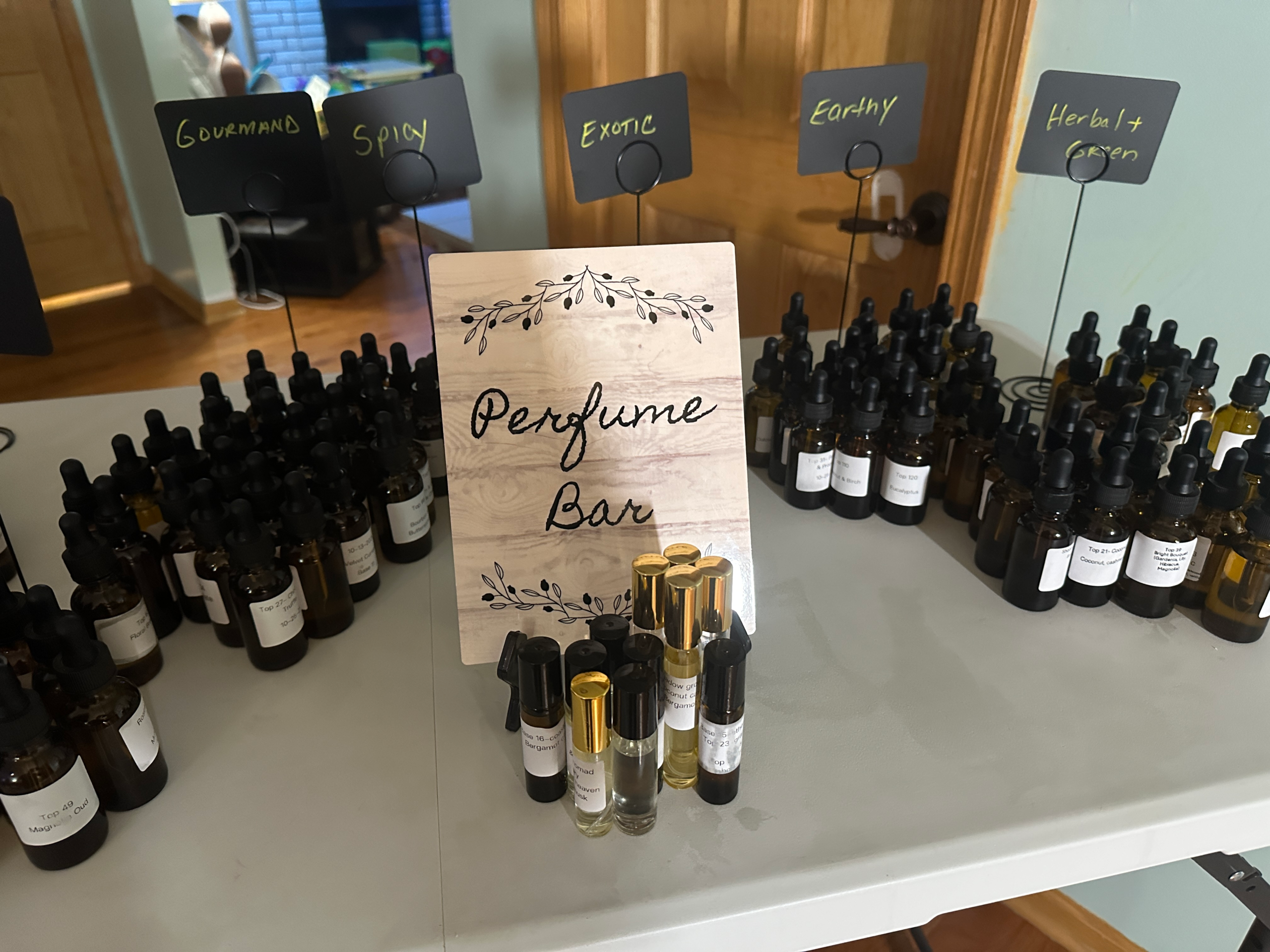
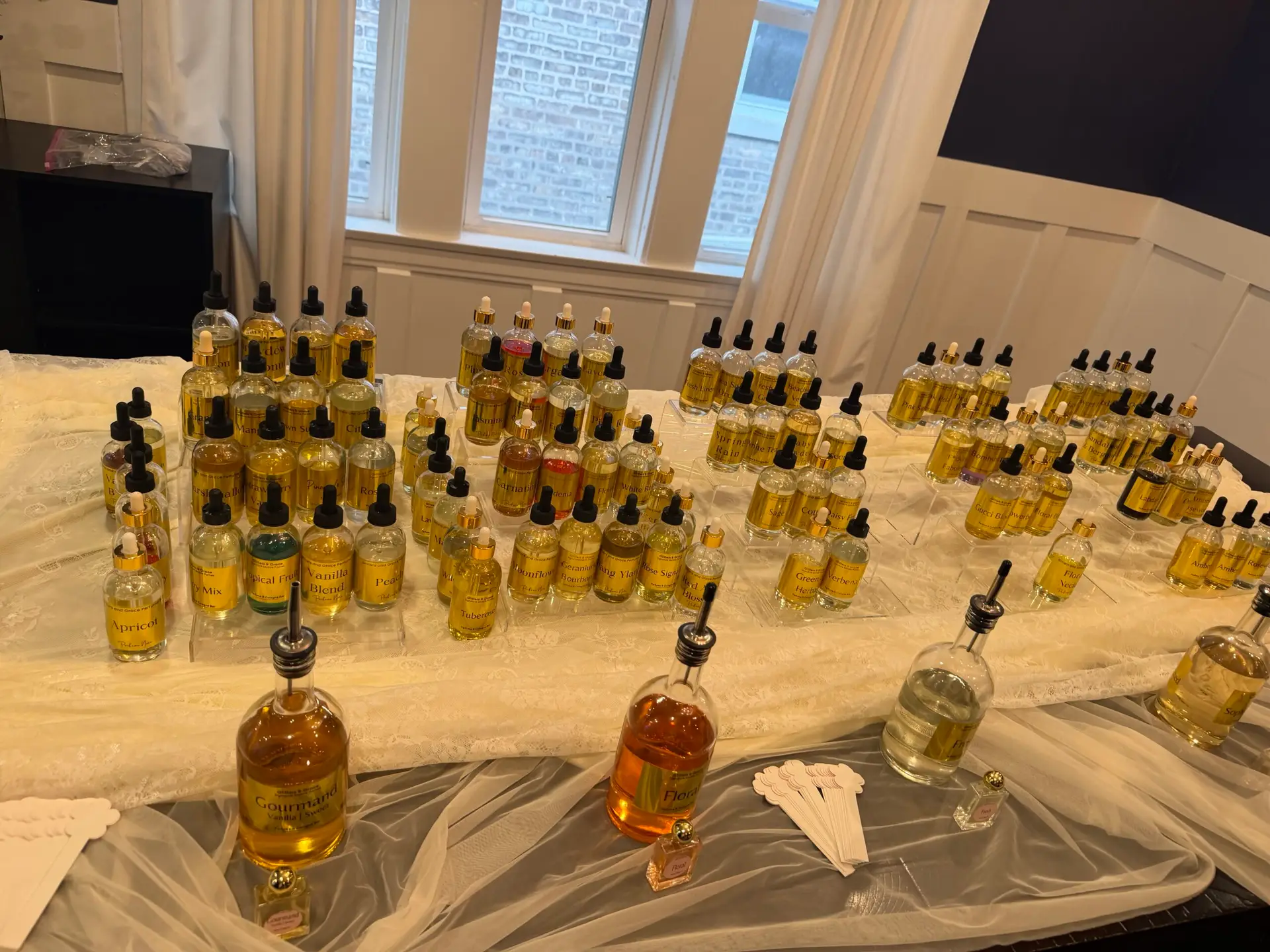
Book a perfume bar and every guest blends and bottles their own eau de parfum, a perfume-strength spray made at 50% fragrance material to perfumer's alcohol. Our Mini bar offers 60+ materials and our Full bar offers 120+. Bars start at $500. See how to make your own perfume with us.
In a small group
A perfume-making workshop is slower and more hands-on, a lovely way to learn how perfume is built, note by note.
Just for you
A one-to-one fragrance consultation is $650. You can blend with my guidance, or I can create the perfume for you. Either way, your formula is recorded so it can be remade.
What else do people ask about making perfume at home?
Can you make your own perfume at home?
Yes. You need fragrance materials, perfumer's alcohol, a scale, glass bottles and paper smelling strips. Start with a few materials, write everything down and let each blend rest before you judge it.
What alcohol do you use to make perfume?
Perfumer's alcohol, a high-proof ethanol made for fragrance. Karen Gilbert recommends 96% or higher. Rubbing alcohol and vodka are not good substitutes for a perfume you will wear.
Can I make perfume with just essential oils?
You can, and it is a lovely way to start, but essential-oil-only blends often lean on bright top notes that fade quickly. Adding a few base materials, like vanilla, resins or woods, helps the scent last.
How long should homemade perfume rest?
I let a new blend sit at least overnight, and often a few days to a couple of weeks, then smell it again. The materials settle and soften together as they rest.
Is homemade perfume safe for skin?
It can be, if you dilute carefully and follow IFRA guidelines, the safety standards set by the International Fragrance Association. Some citrus oils can react with sunlight, so test a small patch first.
Where should a beginner buy perfume materials?
Look for perfumery suppliers rather than aromatherapy shops. I trust Perfumer's Apprentice and Fraterworks for small sizes of real perfumery materials.
Can I make my own perfume with a perfumer instead?
Yes. Book a perfume bar for a party, or a one-to-one fragrance consultation ($650), where your formula is recorded so it can be remade.
Want a perfumer at your table?
Send your date, location and a rough guest count. We reply within 2 business days with an itemized proposal.
Cheryl Gleason
Owner, Perfumer & Creative Director, Glitters and Grace
perfume@glittersandgrace.com · 815.418.6740
Sources: Karen Gilbert, “How to Make Perfume: A Guide for Beginners” · Karen Gilbert, “Top, Middle and Base Notes in Perfumery” · International Fragrance Association, “IFRA Standards 101” · Kaplan, “Why the onset of an itchy eruption on her neck?” Consultant360, 2013