
Blending Scents at the Perfume Bar: Your DIY Fragrance Guide
This DIY fragrance guide answers the question I hear at every pop-up and every event: what blends well together? Maybe you are building a signature scent, chasing a seasonal mood or making a gift. Either way, the answer starts with a few simple rules.
I wrote this for beginners, scent lovers and curious guests. It is built around the same families of materials we bring to our bars, so you can use it the next time you stand in front of one.
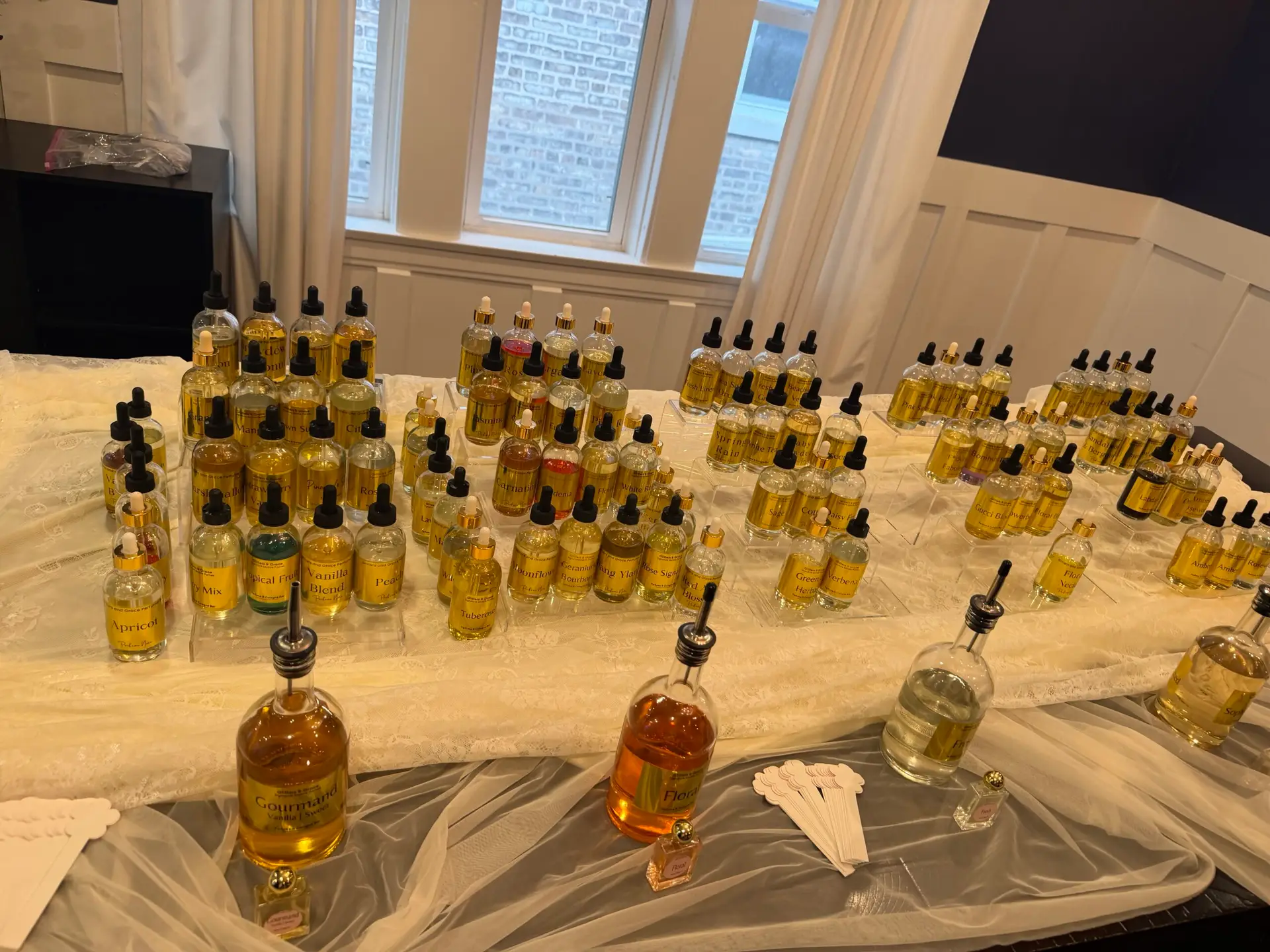
- Written by a perfumer
- Six base styles
- Easy pairings to try
- Made in New Lenox
First, a truth: less is more
Yes, you can blend everything together. But should you? Not always. When guests ask if they can put six, seven or eight ingredients into one 15 ml bottle, I say yes, but. The more you add, the higher the chance of a muddy result. Scents lose their sparkle, flatten out or clash. Some materials are bullies and will take over the whole blend.
Well-made perfumes often use fewer notes, carefully layered. So start with three or four, smell as you go, and stop when it makes you smile.
Strong materials like patchouli can take over a blend. Add them one drop at a time, and smell before you add another.
Bring this guide to a perfume bar
Our hosts guide every guest from the first sniff to the finished bottle. Book a perfume bar for your next party, and we will reply within two business days with an itemized proposal.
Start with a base: the perfume bar method
Every blend at our bars starts from a base. A base is the foundation a perfume is built on. In perfumery, base notes are the ones that linger longest and give depth: think sandalwood, amber, vanilla, musk or patchouli. We offer six base styles: floral, masculine, fresh, musk, sophisticated and gourmand, which simply means sweet and edible-smelling.
Our bases are made with blending in mind. They include fixatives, materials that slow evaporation and anchor the lighter notes, plus balanced accords. An accord is a small blend that smells like one idea, the way a chord is several notes that sound like one sound. That balance leaves room for you to layer without overwhelming yourself, or the person sitting next to you.
Then come the top and heart notes. Top notes are the sparkling first impression, like bergamot, neroli and pink pepper. Heart notes are the soul of a fragrance: most florals, such as jasmine, violet and rose, plus earthy and spicy notes like green tea, cinnamon and lavender.
Materials worth knowing at the bar
For the base. Musk is soft, clean and skin-like, and pairs with floral, citrus and woody notes. Amber is warm, resinous and cozy. Sandalwood is creamy and soft. Patchouli is earthy and rich. Vanilla is sweet and comforting. Tonka bean is nutty and almond-like, lovely with gourmand and woody notes. Cashmeran, a modern perfumery molecule, smells like soft musk with a woody, slightly spicy edge.
For the top and heart. Bergamot is bright and slightly floral. Orange is juicy and uplifting. Grapefruit is tart and sparkling. Mint is cool and fresh. Basil is green and a little spicy. Lavender is calm and herbal. Rose is the classic romantic floral. Jasmine is rich, sweet and white. Geranium is rosy and green, with a hint of mint.
We work with absolutes, CO2 extracts and essential oils. In plain words, these are the concentrated natural extracts perfumers use. An absolute is one of the richest of them, often made from delicate flowers like jasmine.
Fragrance families and what smells good together
Floral is romantic and elegant: rose, jasmine, peony, tuberose. Woody notes add depth, ambrée adds warmth and citrus adds sparkle. Try this: rose, bergamot and Hedione, a modern molecule with a soft, airy jasmine feel.
Herbal and green is crisp and natural: basil, mint, cut grass, galbanum (a sharp, green resin). Citrus brightens it, earthy notes ground it and florals soften it. Try this: basil, lemon and galbanum.
Fresh and citrus is bright and zesty: lemon, bergamot, grapefruit, neroli. Green notes add clarity and woods add polish. Try this: bergamot, neroli and lemon over a clean ambery base.
Ambrée, once called oriental, is warm and sensual: vanilla, amber, incense, spices. Florals soften it and citrus lifts it. Try this: vanilla absolute, pink pepper and a touch of jasmine.
Woody, earthy and gourmand blends
Woody is grounded and sophisticated: sandalwood, cedar, vetiver, patchouli. Florals add romance, ambrée adds richness and citrus adds brightness. Try this: sandalwood, patchouli and bergamot.
Earthy is raw and calming: patchouli, moss, soil, hay. Green notes freshen it, woods give it structure and ambrée warms it. Try this: patchouli, oakmoss, galbanum and a little vanilla.
Gourmand is delicious and comforting: praline, caramel, almond, chocolate, coffee. Ambrée deepens it, woods balance it and a floral adds elegance. Try this: tonka bean, vanilla and a soft rose, so the sweetness feels grown-up.
How to use this DIY fragrance guide at your next event
Pick one base style that sounds like you. Smell three or four top and heart notes on test strips, and keep the two you love. Add drops slowly, smell after each one, and remember that you can always add more but never take away.
Not ready to decide from scratch? Our signage suggests combinations for each base, and our hosts are happy to help. You will leave with an eau de parfum, a perfume-strength spray made at 50% fragrance material to perfumer's alcohol.
If you want a fragrance you can reorder for years, that is a different service. A one-to-one fragrance consultation keeps your formula on record so it can be remade. Curious about the formats first? See our perfume bar styles, or start with our guide to building your signature scent.
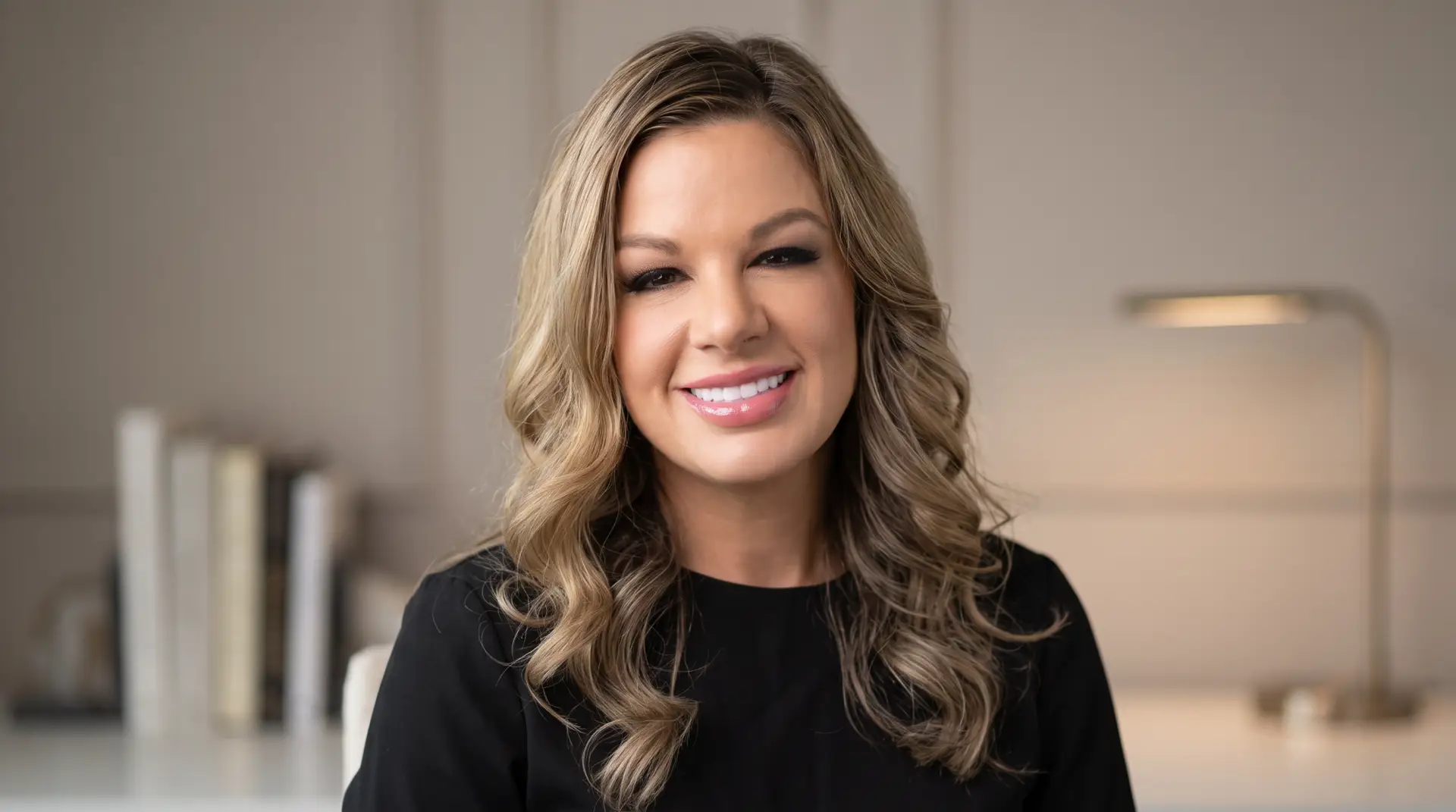
Glitters and Grace was founded by Cheryl Gleason, a trained perfumer and cosmetic and skincare formulator. Every perfume, lip color and skincare base is made by hand in our New Lenox lab. Meet the founder.
DIY fragrance questions
How many materials should I use in one blend?
Start with three or four on top of your base. More than that raises the chance of a muddy scent.
What bottle sizes do you offer at the perfume bar?
We offer 15 ml and 20 ml bottles of eau de parfum.
Can I recreate my blend later?
Formulas are not recorded at event perfume bars. A one-to-one fragrance consultation, which is $650, records a formula so it can be remade.
What is a fixative?
A material that slows evaporation, anchoring the lighter top notes so the perfume lasts longer on skin.
Can I bring the perfume bar to my own party?
Yes. Adult events start at $500 and kids parties start at $475. Send your date through the booking form.
Questions about a blend?
Email perfume@glittersandgrace.com anytime. I love helping guests refine their blends and find a scent that feels like their own. Or send your date, and we will bring the bar to you.
perfume@glittersandgrace.com · 815.418.6740
With Grace,
Cheryl Gleason · Owner, Perfumer & Creative Director

Prefer to text? 815.418.6740 · or email us
