Are Wedding Favors Necessary, or Can You Skip Them?
An honest answer from a perfumer who has watched hundreds of receptions end, and seen which favors go home and which stay on the table.
 By Cheryl Gleason · Founder & Perfumer
Do you really need wedding favors?
No. Wedding favors are a kind gesture, not a rule, and skipping them is perfectly polite. If you do give one, choose something guests will eat, use or make themselves. Those are the favors that go home. Personalized trinkets are the ones left on the table.
Even The Knot, which surveys thousands of couples every year, says it plainly. Favors are “a fun way to thank guests, but they’re not expected.”
So you have permission to skip them. Before you cross them off the list, though, it helps to know why favors exist in the first place, and what makes the difference between one that matters and one that gets swept up with the napkins.
I have worked weddings since long before perfume bars were trendy. I have seen the end of a lot of receptions: the last song, the lights coming up, and little boxes still sitting at every place setting. Guests are not ungrateful. Most of those favors simply were never meant for them.
Where did wedding favors come from?
Wedding favors started with sugar. During the Middle Ages and the Renaissance, sugar-coated almonds were served from small decorative containers called a bonbonnière, a French word for a little box of sweets. A sweet gift was a way to share the couple’s good fortune with every guest.
The tradition lives on in Italian, Greek and many European families. Guests receive a small bag of five sugared almonds, often called Jordan almonds. According to the history of the bonbonnière, the five almonds stand for health, wealth, happiness, fertility and long life.
Notice what the original favor was. It was something edible, something meaningful, and a small luxury shared with the people you love. That is still the best test for a favor today.
Keep it. Many South Asian, Middle Eastern, Greek and Italian families give favors that carry real meaning. For cultural celebrations we also make attars, which are alcohol-free perfume oils, on request. See our ideas for South Asian wedding favors.
Which wedding favors do guests actually keep?
Guests keep favors they can eat, use, or that feel made for them. They leave behind anything that only makes sense for the couple.
The wedding planning site Joy sums it up in one line: “The best wedding favors are edible, useful, or deeply personal.” Based on what couples report back, Joy rates honey, custom cookies and good wine keys as favors guests usually keep. Generic photo frames, glass coasters, mint tins and custom koozies land at the bottom.
Emily Lasnier at Inside Weddings lists the five kinds of favors guests leave behind most:
- Anything printed with your names or date. It has no use once the day is over.
- Anything hard to carry. Bulky or fragile items don’t fit in a purse or a carry-on, and plants rarely survive the trip.
- Gifts that need work. A recipe kit means guests have to cook before they enjoy it.
- One piece of a set. A single wine glass doesn’t match anything at home.
- Anything flimsy. Her advice is blunt: “You’d be better off forgoing favors altogether.”
| Usually kept | Usually left behind | |
|---|---|---|
| Edible | Good chocolate, honey, cookies | Mints in a printed tin |
| Useful | Something they reach for at home | Coasters, koozies, a lone glass |
| Personal | Something they chose or made | Anything with only your names on it |
Why does a favor guests make themselves go home?
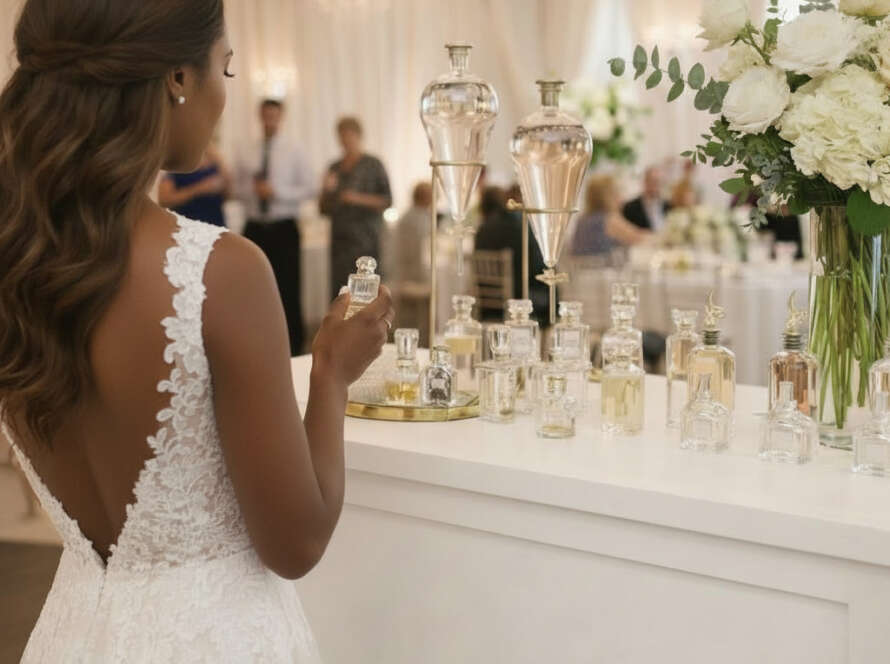
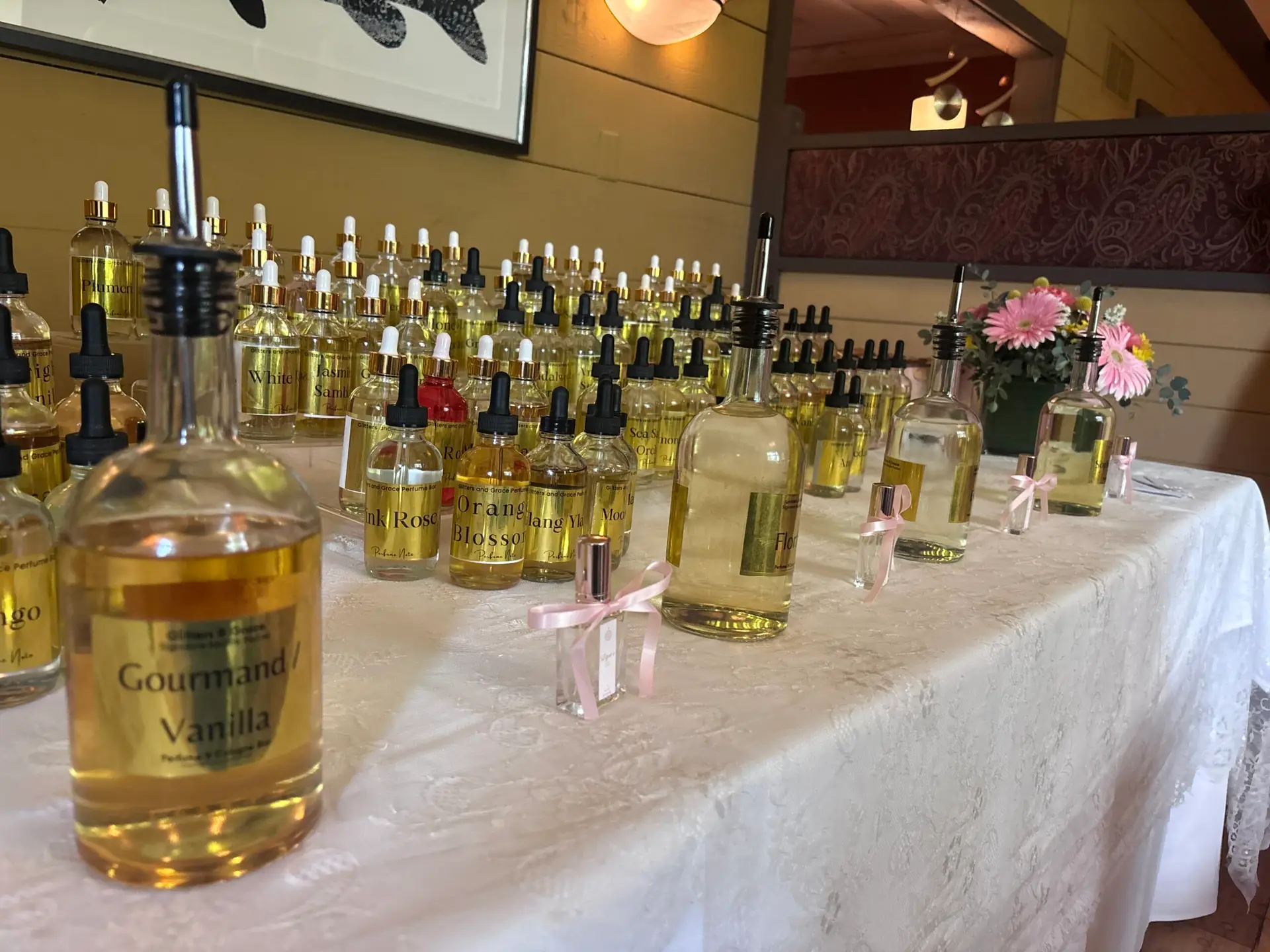
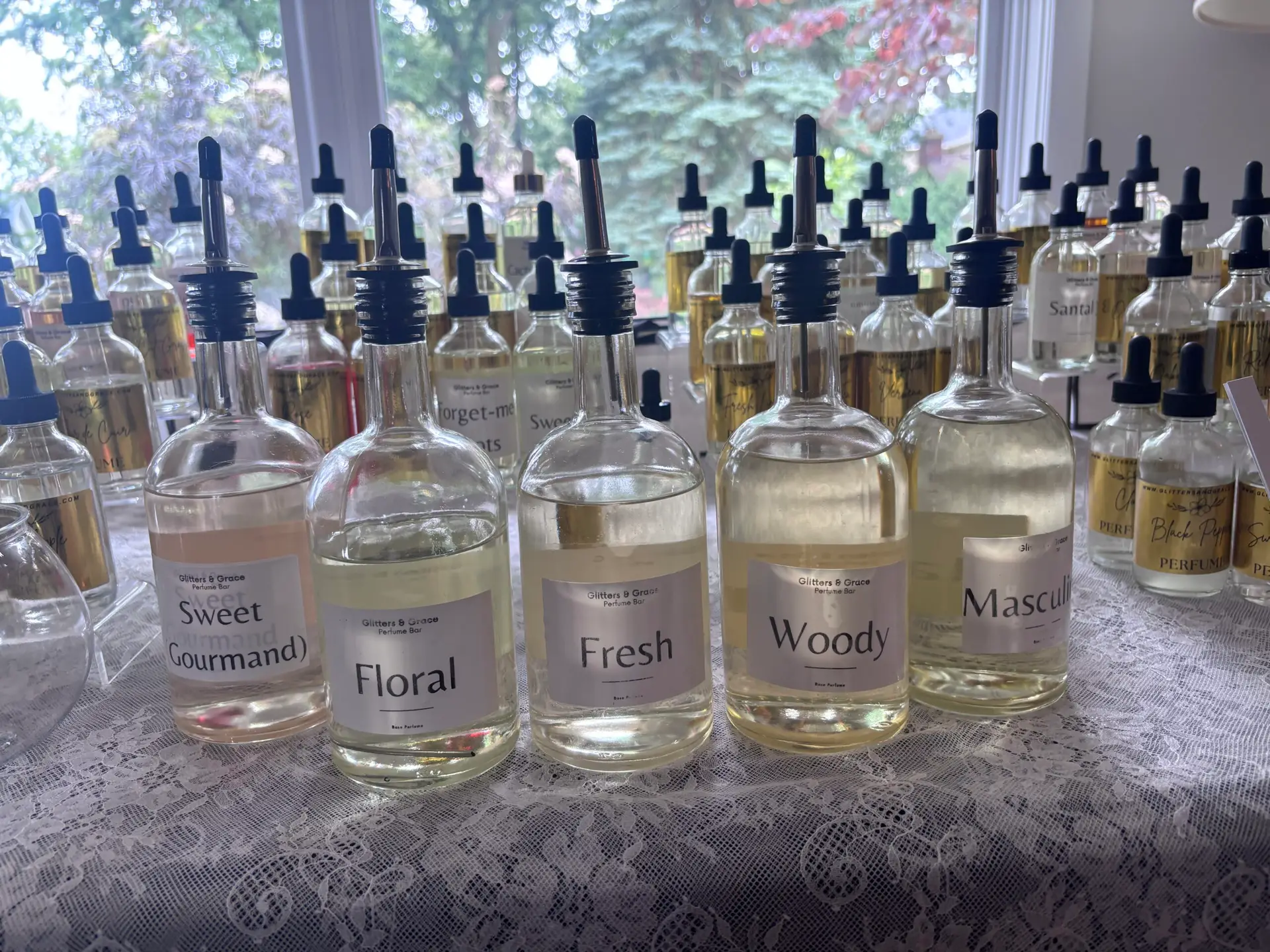
Because they chose it. A guest who stands at our perfume bar, smells their way through the materials and builds a blend has already decided they love it before it’s bottled. Nobody leaves behind something that smells like them.
The father of the bride’s blend
At a reception at The Drake Oak Brook, the father of the bride sat down at our bar and chose a calming blend of lavender and cedarwood. It was a scent of home, made with his daughter in mind.
That bottle was never going to sit on a table at the end of the night. You can read the whole evening in our Oak Brook wedding story.
It also helps that every bottle from our bars is an eau de parfum, meaning a perfume-strength spray, not a light body mist. We blend with absolutes (concentrated extracts from delicate flowers like jasmine and rose), CO₂ extracts (plant aromas drawn out gently at low temperatures) and essential oils. It smells like real perfume because it is.
Scent also carries memory in a way few things do. A 2014 review in Frontiers in Psychology found that memories triggered by smell more often come with the feeling of being taken back to the moment. That is a lot to ask of a coaster.
“It was worth every dime.”Kendra, who married Alex in front of 40 guests
Kendra and Alex had a small, heartfelt wedding, and the perfume bar became the warm hub of the evening. Kendra told me afterward that guests loved learning about fragrance families. Read more of their story in why couples book a perfume bar.
What can you do instead of traditional wedding favors?
You have three good paths. Each one is gracious, and none of them involves a box of trinkets.
Skip favors and say so
Put the money toward something everyone enjoys, like a late-night snack, a better bar or a donation to a cause you love. A small sign at the escort card table lets guests know. Joy notes that skipping favors entirely is always acceptable.
Give one small, edible favor
A good chocolate, a local honey or a cookie from a bakery you love. Simple, consumable and easy to carry home.
Make the favor an experience
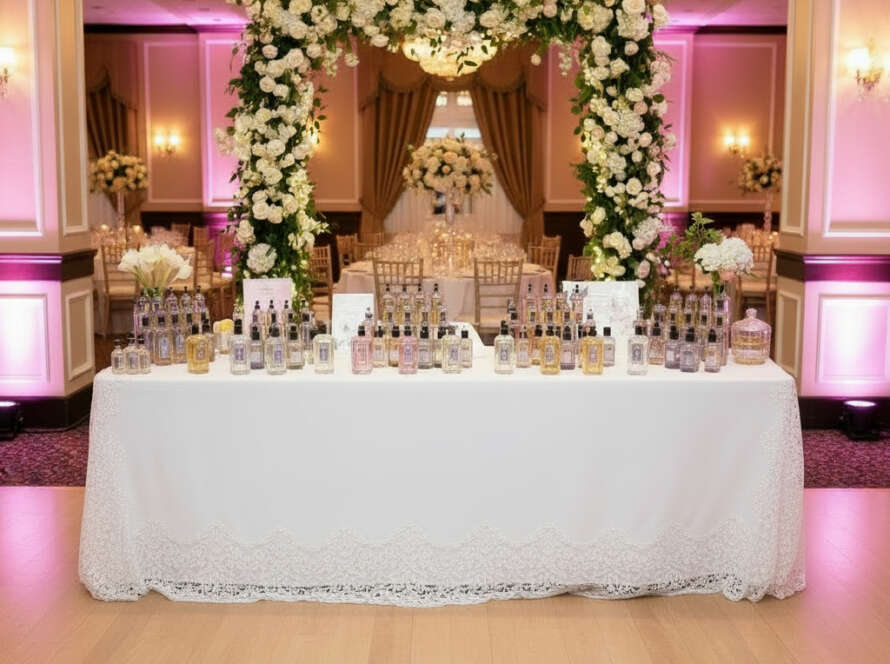
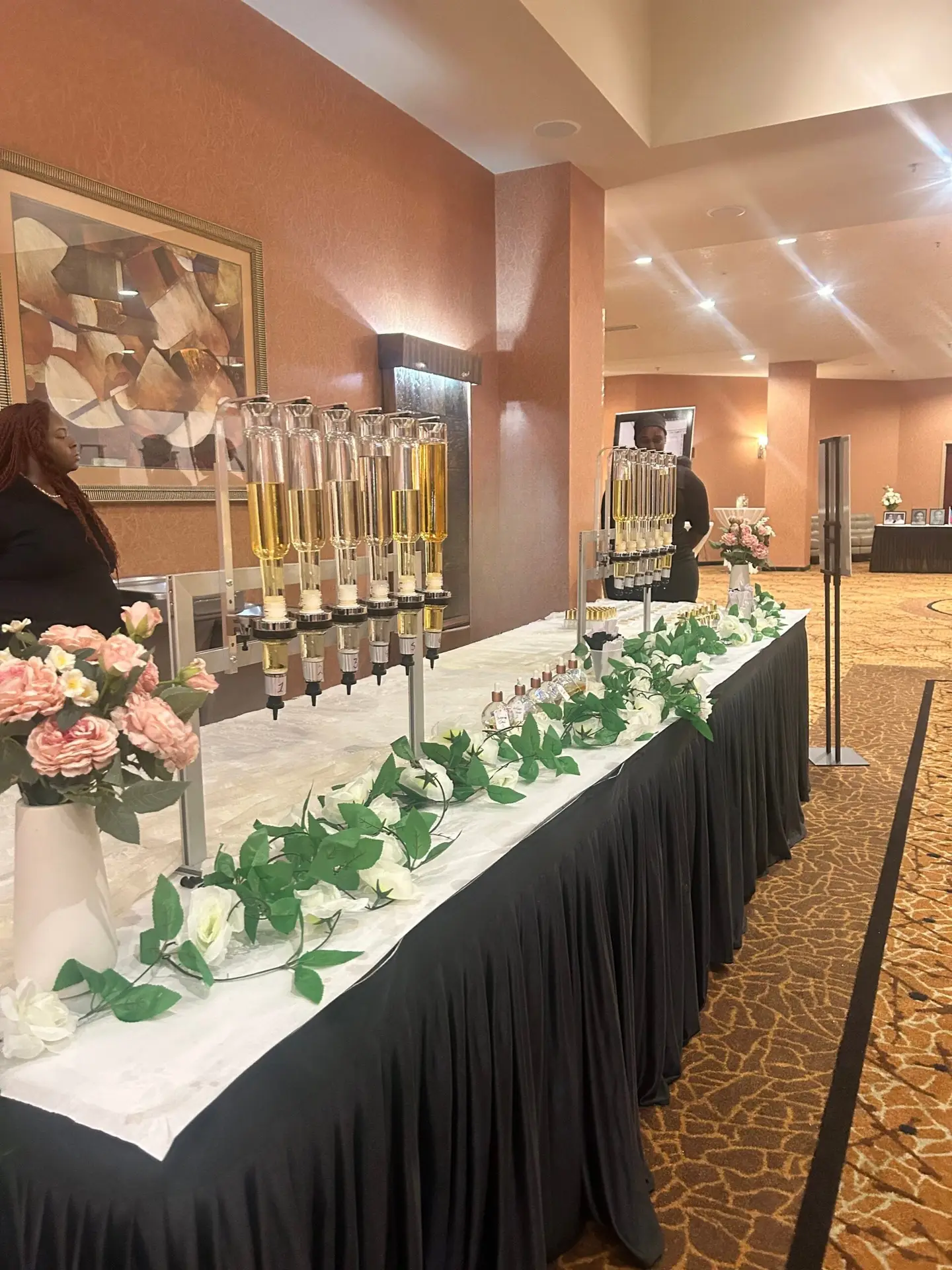
An interactive station gives guests something to do during cocktail hour and something to take home. That might be a wedding perfume bar, a luxury candy bar styled in apothecary jars, or a custom perfume favor made in advance.
If you choose a personal favor, add the personal touch. Most of our couples order custom labels with their names and wedding date. The few who skipped them are the ones who told me later they wished they hadn’t.
Still deciding whether a perfume bar is the right fit for your day? I wrote an honest guide to whether a wedding perfume bar is worth it, including when to skip one.
If you’re now wondering about quantity or budget, we answer those next: how many wedding favors to order and how much to spend on wedding favors.
What else do couples ask about wedding favors?
Are wedding favors necessary?
No. Favors are a thoughtful extra, not an etiquette requirement, and many couples skip them. If you give one, pick something guests will eat, use or make themselves.
Is it rude not to give wedding favors?
Not at all. Guests remember the welcome, the food and the dancing far more than a favor. A small sign explaining a donation or a late-night snack is a gracious alternative.
Where did the tradition of wedding favors come from?
It began with sugar-coated almonds served from small decorative boxes called bonbonnières. In the Italian tradition, five sugared almonds stand for health, wealth, happiness, fertility and long life.
What wedding favors do guests actually keep?
Favors that are edible, useful or personal. Things printed only with the couple’s names or date, bulky items and single pieces of a set are the most often left behind.
What is a good alternative to traditional favors?
An experience. A perfume bar or candy bar gives guests something to do at the reception and something to take home, so one choice covers entertainment and the favor.
Can a perfume bar replace wedding favors?
Yes. Every guest who visits takes home a bottle of eau de parfum they made or chose, so it works as the favor and the cocktail-hour activity.
Want a favor nobody leaves behind?
Send your date, venue and guest count. We will reply within 2 business days with an itemized proposal, with no obligation.
Cheryl Gleason
Owner, Perfumer & Creative Director, Glitters and Grace
perfume@glittersandgrace.com · 815.418.6740
Sources: The Knot, “Average Cost of Wedding Favors” (2025 Real Weddings Study) · Joy, “Wedding Favors Guide 2026” · Inside Weddings, “Wedding Favors Guests Will Leave Behind” · Wikipedia, “Bonbonniere” · Larsson, Willander, Karlsson & Arshamian, Frontiers in Psychology, 2014